





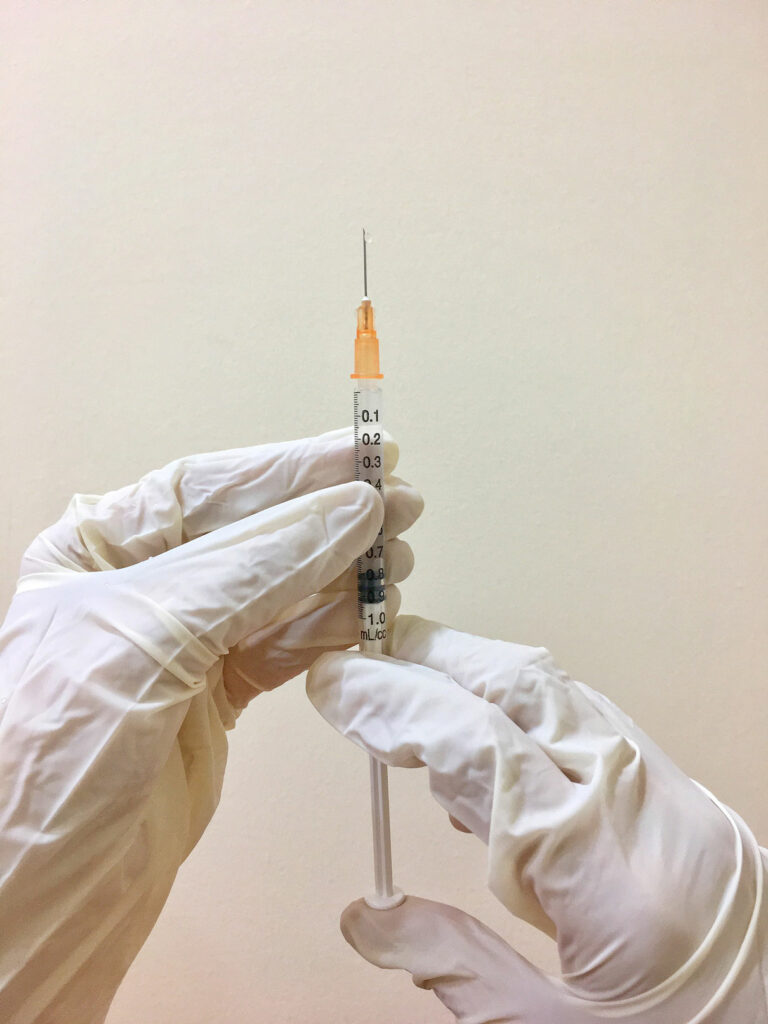
Adrenal crisis emergency information
Here you’ll find:
- What to do in an adrenal crisis
- How to use the emergency hydrocortisone injection
- What is an adrenal crisis?
- What are the signs of adrenal crisis?
- Causes of adrenal crisis
- Preventing an adrenal crisis
- Steroid Sick Day Rules
An adrenal crisis is a life-threatening medical emergency. If you or someone else is having an adrenal crisis follow the steps below immediately.
What to do in an adrenal crisis

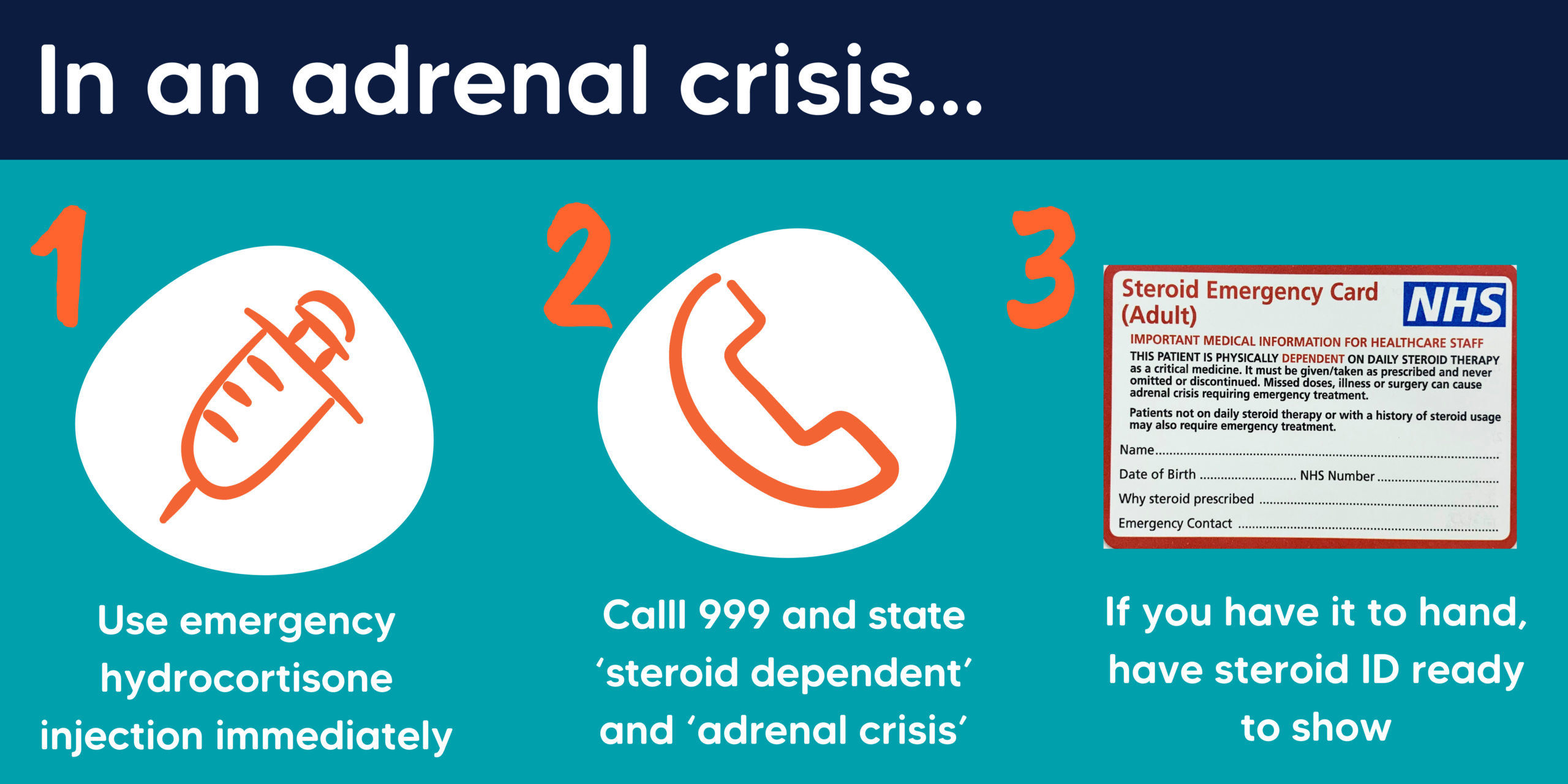
Use an emergency 100 mg hydrocortisone injection kit immediately.
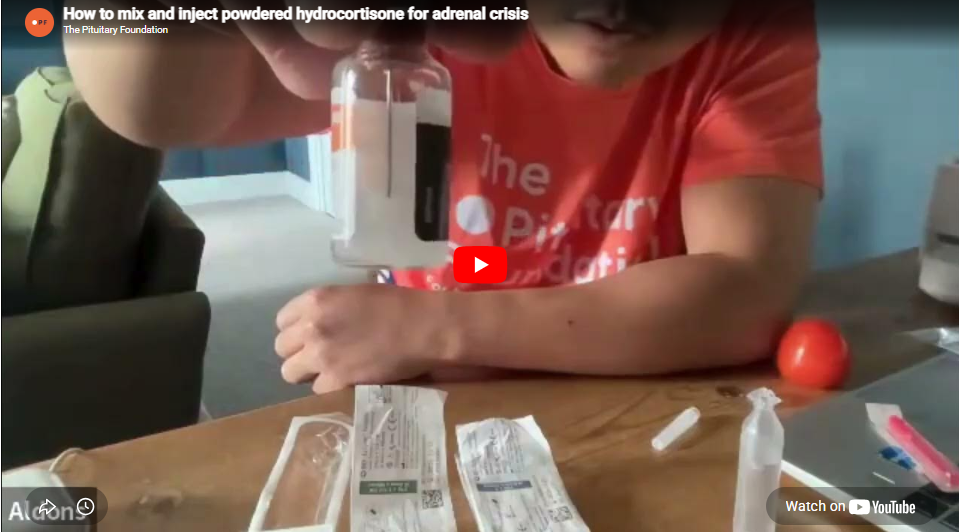
Follow the steps in the kit or watch the video below to see how to do this. If you do not have an injection kit, go to Step 2 immediately.

Call 999 and say clearly that you (or someone else) are ‘steroid-dependant’ and ‘having an adrenal crisis’.
These phrases will make your call a priority, so it is important to say them.

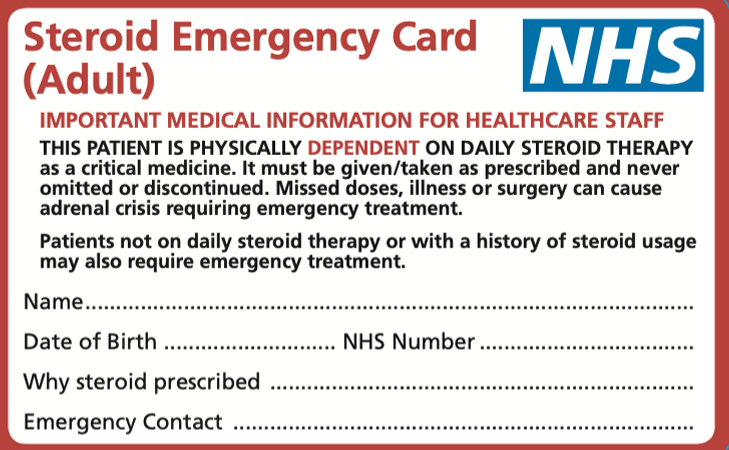
If you have it available, have your steroid identification ready to show the ambulance staff.
This could be an NHS Steroid Emergency Card, a medical ID bracelet or our Adrenal Insufficiency Action Plan.
How do I use the emergency hydrocortisone injection?
Follow the steps below to prepare and use an emergency injection. These instructions cover the powder version of hydrocortisone. You can also watch the video below to see more on this.
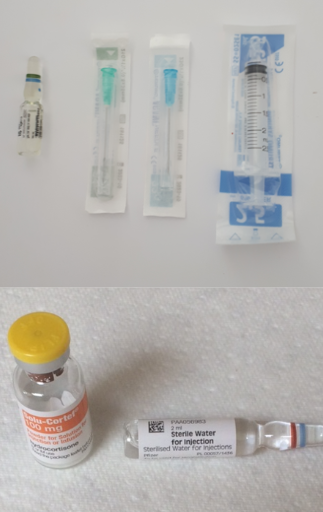
Step 1: Check you have all the equipment listed below. Clean the injection site (mid-upper thigh or upper arm) and wash your hands if possible.
Equipment:
- 1 x drawing up needle (green)
- 1 x injection needle (blue)
- 1 x 2 ml syringe
and
- 1 x ampoule of water (a glass or plastic bottle)
- 1 x ampoule of powder (glass bottle)
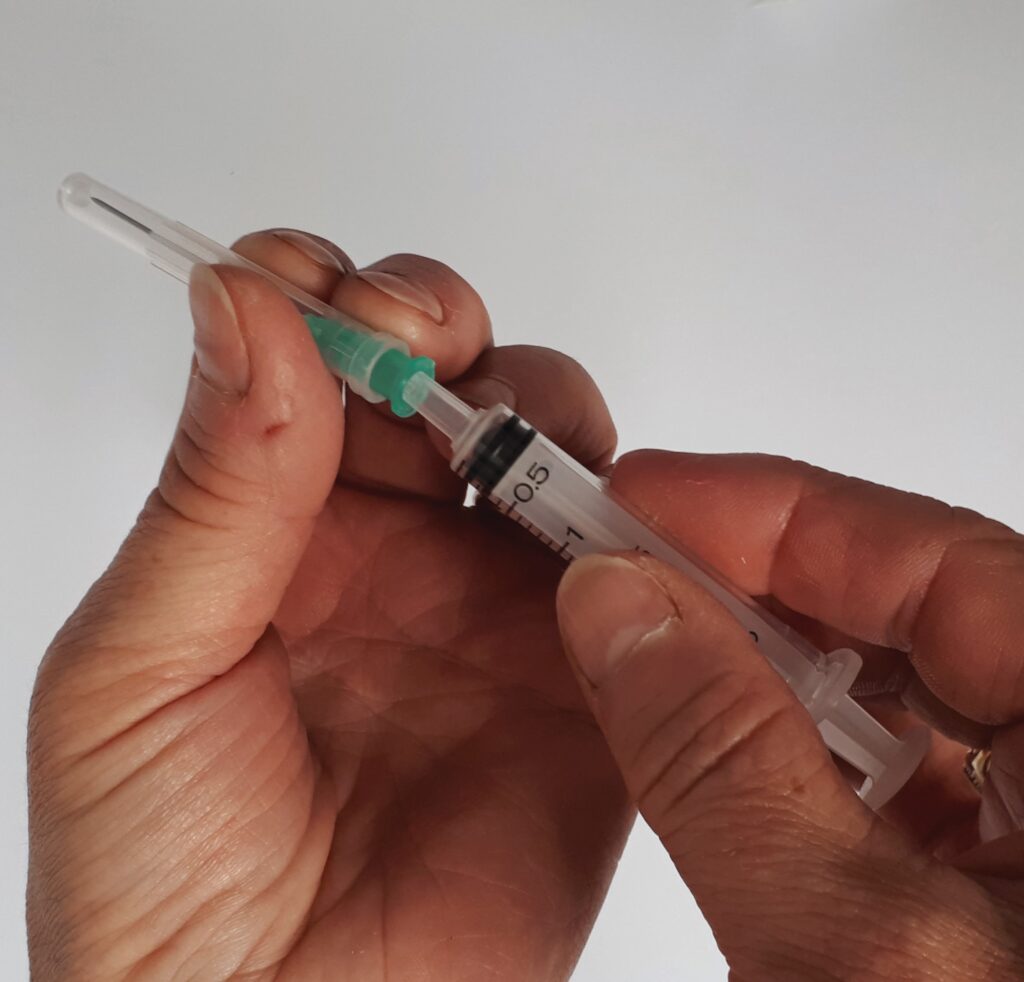
Step 2: Open the plastic packets of the needles and syringe. Attach the green ‘drawing up’ needle to the syringe.
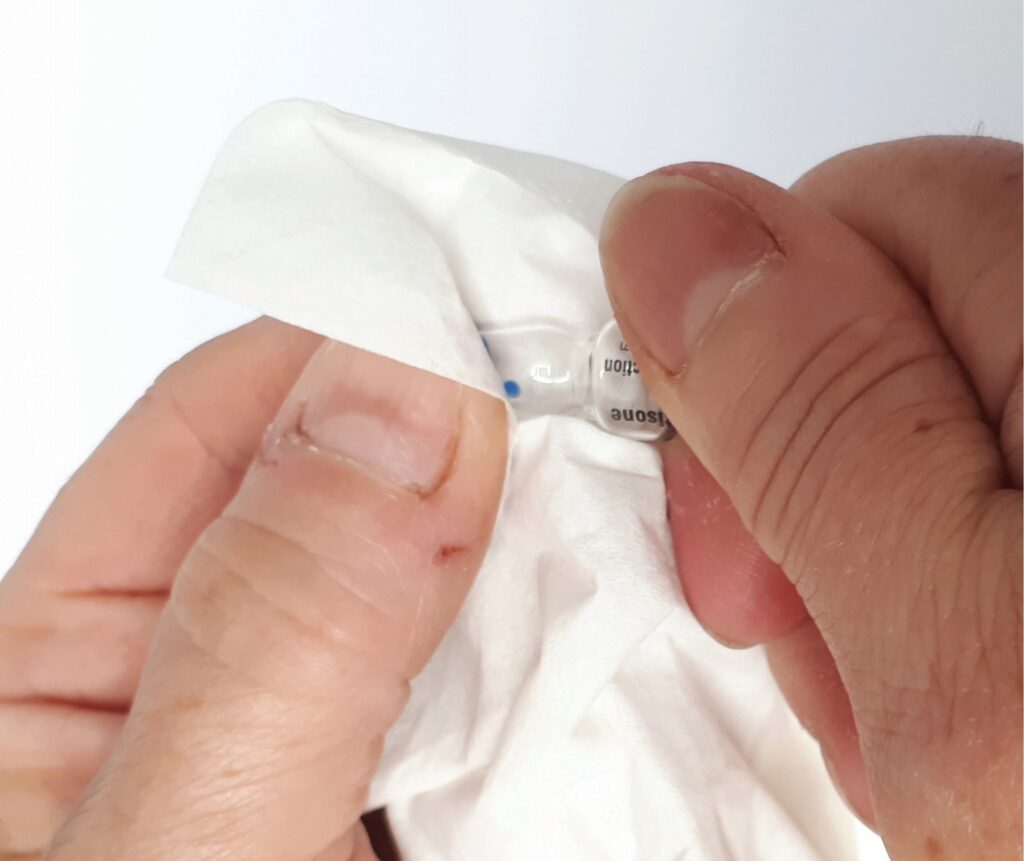
Step 3: Take the water ampoule and make sure all the water is at the bottom. Snap the top off the water ampoule. You can use some tissue to protect your fingers while doing this.
If you are using the glass ampoule, there will be a blue dot at the top of the bottle. Make sure this dot is facing towards you and snap the top backwards, away from the dot.
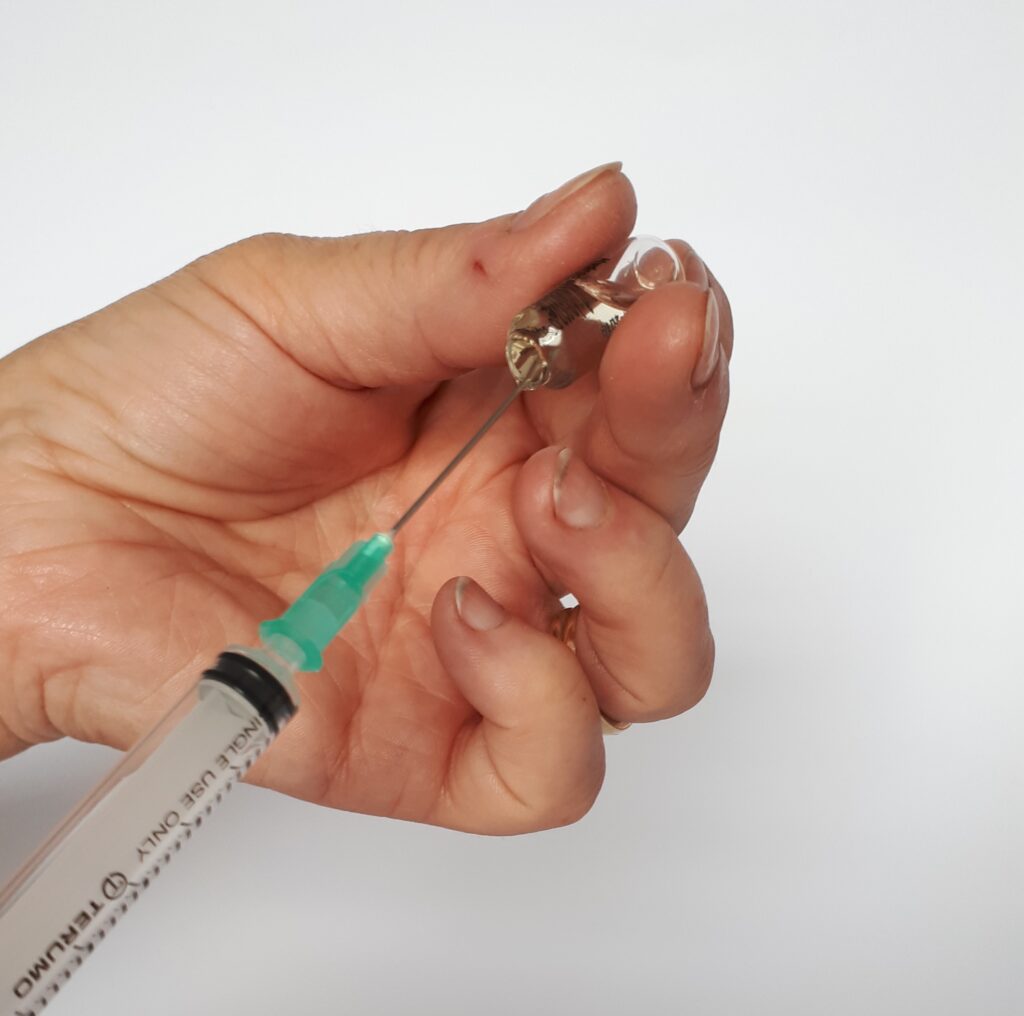
Step 4: Take the cap off the green needle. Place the needle tip into the water ampoule (this can be tipped without losing the liquid). Pull back the plunger to draw the liquid up into the syringe.
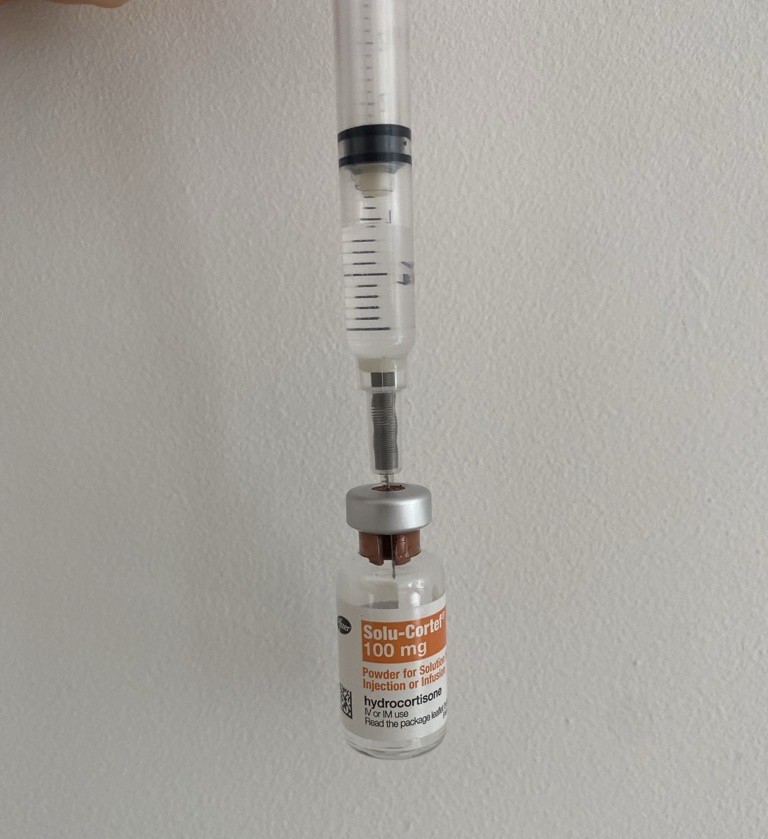
Step 5: Take the yellow cap off the hydrocortisone ampoule. Hold it steady on a flat surface. Push the needle through the rubber top. Push the plunger of the syringe down to inject water into the powder ampoule. Keep the plunger down and remove the needle. Mix the powder and water by swirling for a few seconds. Re-insert the needle into the ampoule and draw up the mixed liquid, same as in step 4.
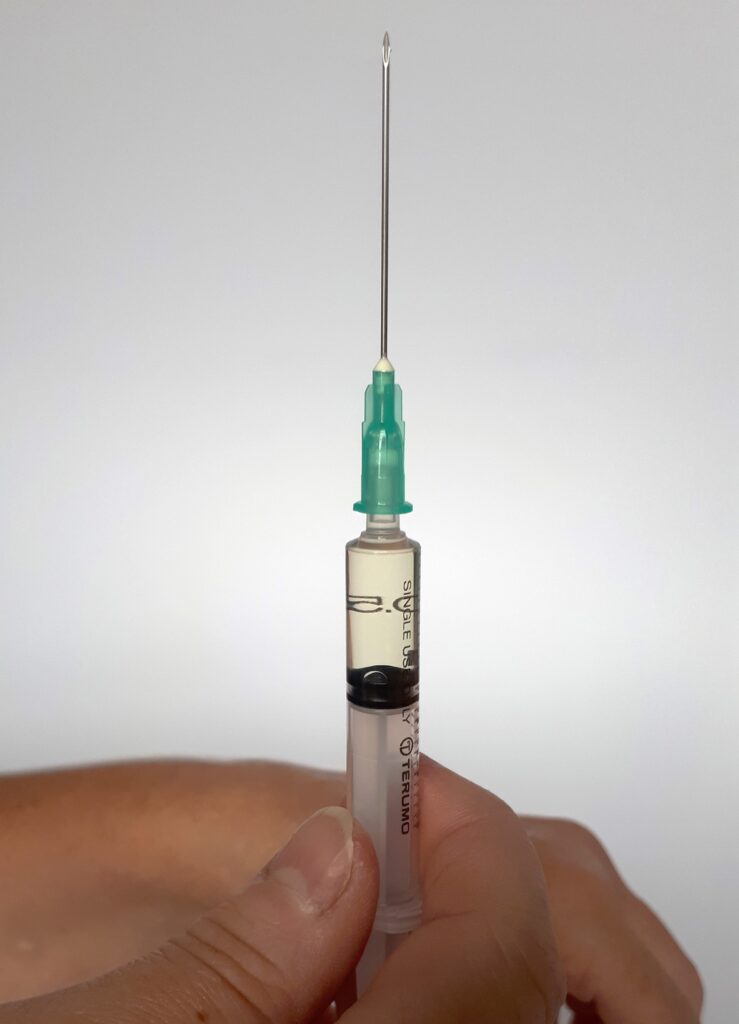
Step 6: Hold the filled syringe at eye level, with the needle facing up. Remove the green ‘drawing up’ needle and place it in a sharps bin, if one is available. Now attach the blue ‘injection’ needle. Gently tap the syringe to make sure there are no air bubbles in the liquid. If there are air bubbles, you can push the plunger down a little bit to push them out.
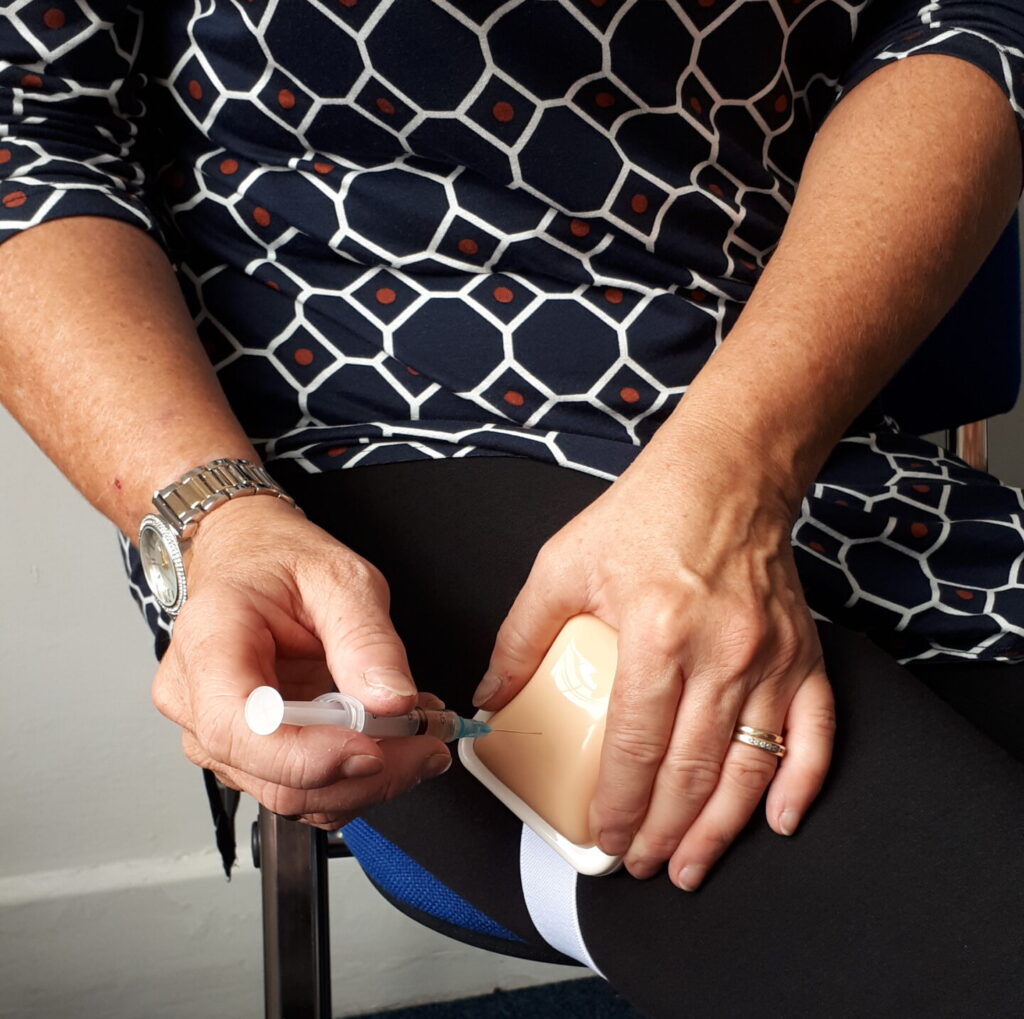
Step 7: Hold the barrel of the syringe between the thumb and forefinger of your dominant hand (like you are holding a pen or a dart). Take off the needle cover and use the other hand to support the skin at the injection site. Hold the needle at a 90-degree angle to the injection site. Push three-quarters of the needle into the skin of the mid-upper thigh, using a smooth, steady push.
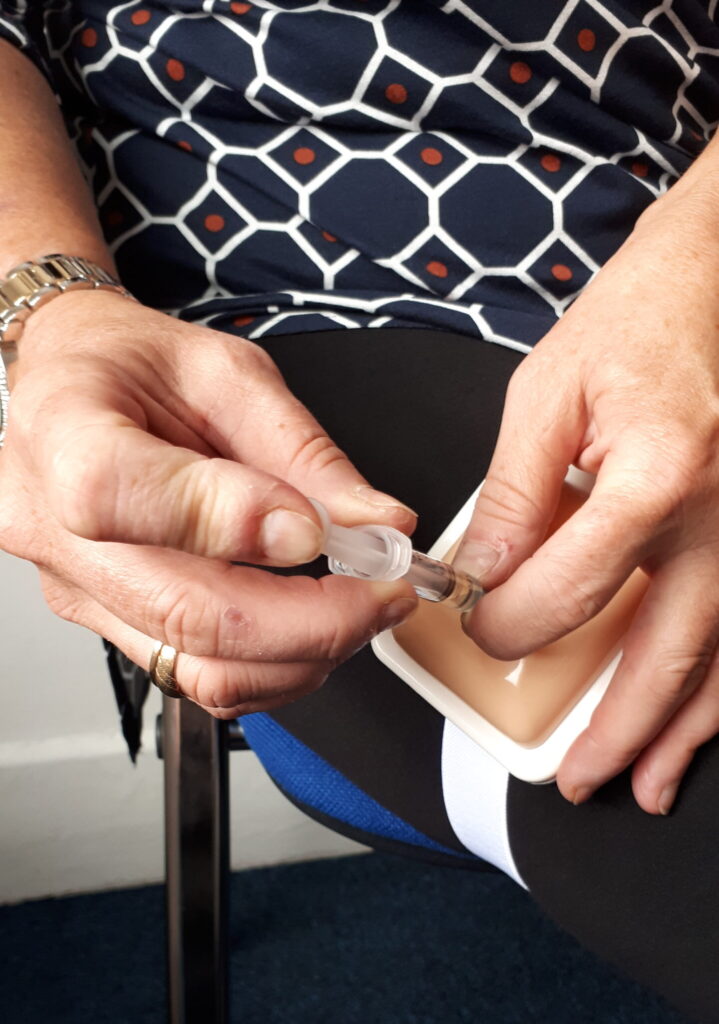
Step 8: Smoothly push down the plunger until all the liquid has been injected into the leg or arm. Count to ten before carefully removing the needle. Apply gentle pressure to the injection site with a cotton swab or tissue.
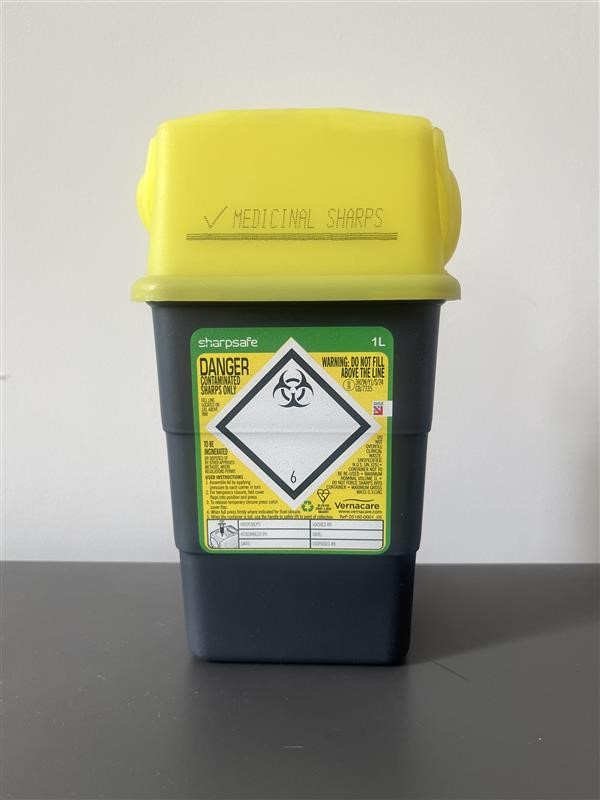
Step 9: Place any used equipment (including needles, syringes and ampoules) into a sharps container, if one is available. Make sure the ambulance has been called and stay with the person until they arrive.
Watch the video below to see how to use your emergency hydrocortisone injection. There will also be step by step instructions included in your emergency injection kit. If you are unable to inject yourself, have someone else inject you using the instructions provided.

By loading the video, you agree to YouTube’s privacy policy.
Learn more
If you are not sure if it is an adrenal crisis, follow the steps above anyway. Having an emergency injection if you do not need one will not harm you. If you are having an adrenal crisis and do not inject, it could be fatal
What is an adrenal crisis?
An adrenal crisis is a life-threatening medical emergency that needs urgent treatment. It is sometimes also called an Addisonian crisis. It happens when levels of cortisol in the body drop too low. This is why the emergency injection is needed, to immediately give you a large dose of steroids.
What are the signs and symptoms of an adrenal crisis?
The symptoms of an adrenal crisis include:
- Feeling sick (nausea)
- Being sick (vomiting)
- Loose, watery poo (diarrhoea)
- Feeling very weak
- Feeling dizzy or light-headed, especially on sitting or standing up
- Feeling very cold and shivery
- Feeling very tired or sleepy
- Confusion
- Headaches
- Muscle aches
- Losing consciousness
The symptoms of an adrenal crisis can be different for each person. You may not have all of the symptoms listed above. If in doubt, you should have your emergency hydrocortisone injection.
It can be hard to know if some symptoms, like fatigue, headache and muscle aches, are a sign of adrenal crisis or something less serious. Our Adrenal Crisis Signs table can help you spot when something may be a sign of adrenal crisis.
If you have more than one of these symptoms at the same time, this can be a sign that your cortisol levels are too low. Similarly, if your symptoms start accumulating, this can also be a sign that your cortisol levels are dropping too low. This may look like having a headache, then starting to feel worse (e.g., sick, shivery, muscle cramps etc). Taking extra steroids by mouth, as outlined in the Sick Day Rules, can stop this from becoming a full adrenal crisis.
What causes an adrenal crisis?
An adrenal crisis can be triggered by different things. Knowing the triggers can help you to prevent an adrenal crisis or be ready to respond to one, if you become unwell.

Sudden onset vomiting or diarrhoea

Severe infection

Stopping steroid medicine suddenly, or taking it too late

Severe injury, like a broken bone

Extreme psychological or emotional stress, such as bereavement

Steroid replacement not given during surgery
If you need to have surgery, it is important to make sure the healthcare team know about your adrenal insufficiency and need for steroid replacement. They can then give you steroids while you are having surgery and while you are recovering. If you are due to have surgery, you can ask your surgeon or healthcare team to make sure they are familiar with the surgical guidance for people with adrenal insufficiency.
How can I prevent an adrenal crisis?
There are things you can do to lower your risk of having an adrenal crisis, such as:
- Make sure you, and others around you, know how to use your emergency injection kit. It is important to ask friends, family, people at work and neighbours to learn how to use this. This way, they can give you your injection if you cannot do it yourself.
- Make sure to take your replacement steroid medication daily, at the recommended time
- Make sure you know how to adjust your dosing when travelling into different time zones or when clocks go forward or back. You can also your endocrine team for guidance with this.
- Understand and follow the steroid Sick Day Rules
- Stay hydrated
- Avoid illness and infection where possible and keep up to date with vaccinations
- Always carry your steroid identification (such as a Steroid Emergency Card or alert bracelet) and show these to any healthcare staff involved in your care
- Make sure you do not run out of steroid medication and always have a large enough supply to take extra when following the Sick Day Rules
To make sure you do not run out of steroids and have enough for sick day rules dosing, it is a good idea to ask your GP to give you a back-up supply of steroids and increase your prescription length to 3 months. You can use our Steroid Prescription Template Letter to do this.

Steroid Prescriptions Template Letter
Use our template letter to request longer steroid prescriptions from your GP.
Download or orderWhat are the steroid Sick Day Rules?
When you are ill, injured or very stressed, your body needs more cortisol. This means you need to take more replacement steroid medication to meet this greater need. This is called ‘updosing’. The steroid Sick Day Rules provide guidance on how to updose, to keep yourself safe and well during times of increased need. They are called ‘Sick Day Rules’ as you often need to updose when sick.
To find out more about the Sick Day Rules, visit our Steroid Sick Day Rules page.
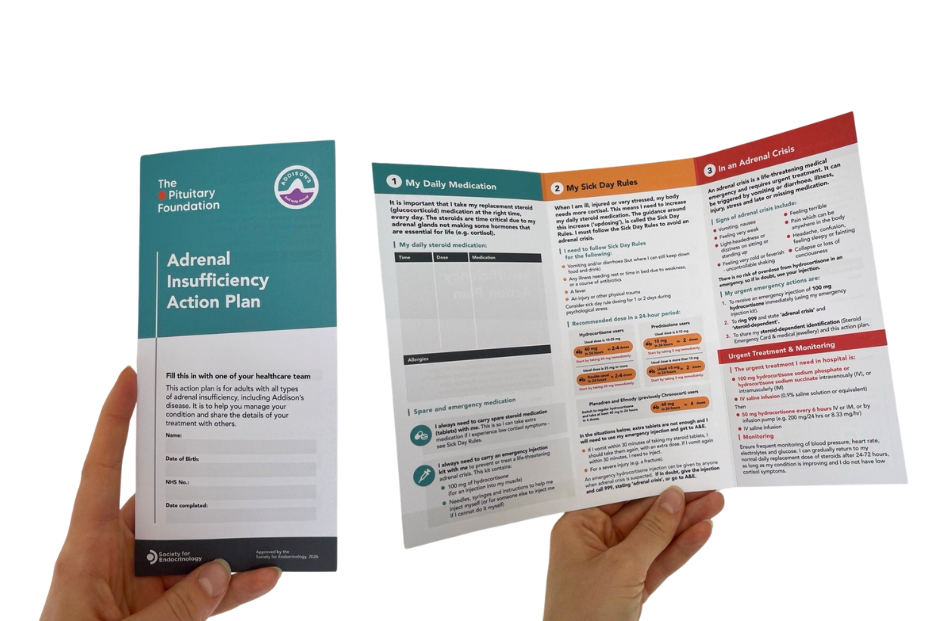
Tell others about your condition and care needs
Our Adrenal Insufficiency Action Plan can be given to friends, family, colleagues and your healthcare team to tell them about your condition. It includes:
- What adrenal insufficiency is and why you need to take replacement steroids
- What your daily steroid dose is
- What the Sick Day Rules are and how to updose
- Signs of adrenal crisis and what to do if you have one
- What treatment you need in hospital for an adrenal crisis
Common questions
If you are using the powdered hydrocortisone, your kit may have two needle tops – one green and one blue. The green one is for drawing up the water and mixing it with the powder hydrocortisone. The blue needle is the injection needle. This one you will use to draw up the mixed solution and inject yourself with.
This is fine. Some places will prescribe a small glass ampoule of water and some places prescribe a larger plastic ampoule. You only need around 1.5 – 2 ml of water for the injection, but the plastic container has 10 ml. Just draw up what you need from the plastic container and discard the rest.
We understand that many people feel worried about not being able to use the powder injection when having a crisis. We know that other medical conditions and situations can make it harder to mix and use your injection, and the added steps of the powder version may cause further anxiety. We recommend that you learn how to use the powder version, so you are able to inject yourself if you need to. We also suggest asking a friend or neighbour who lives nearby to learn how to inject you, in case you aren’t able to yourself.
You should always call 999 if you are having an adrenal crisis. This is even more important if you don’t have your injection with you, or are not able to inject yourself. By saying the key phrases, ‘adrenal crisis’ and ‘steroid-dependant’, the call handlers will know to prioritse your call and get help to you as soon as possible
Yes, it is always a good idea to call 999 or go to A&E if you are having an adrenal crisis, even if you feel better after your injection. You may need to be monitored and have further treatment, which you need to be in hospital for.
Yes, if you have no other hydrocortisone available you can use an out of date emergency injection. It may not be as effective though, so you should be sure to also call 999 and follow the adrenal crisis steps above.
You should also regularly check your medication supplies, and replace any that are out of date. Your GP or endocrinologist can help you with this.
If you want to refresh your adrenal crisis and injection knowledge, our Sick Day Rules online events are a great way to do this. You can find upcoming events on our events page.
You can also watch our injection training video.
You should contact your hospital’s endocrine department or endocrine nurse. They should be able to provide these.
Emergency information for AVP deficiency (previously diabetes insipidus)
To stay healthy, your body needs to keep a steady balance of levels of water and electrolytes in your blood. If you have AVP deficiency, it can be harder to keep this balance. Weeing lots can cause you to lose too much water, which can upset this balance. Additionally, taking too much desmopressin, or taking desmopressin without drinking enough, can cause you to keep too much water stored in your body.
If the levels of electrolytes and water become unbalanced, this can cause dangerous situations.
What situations do I need to be aware of if I have AVP deficiency?
If you have AVP deficiency, you should seek medical help if any of the following happen.
1. You have missed, or cannot take, your desmopressin and have little or no access to fluids
Why is this a problem?
By not taking desmopressin, your body will not be able to control urine output. This means you will continue to lose water. If you are not able to replace this lost water through drinking this can lead to dehydration and increased levels of sodium (salt) in the blood. An increase in sodium in the blood is known as hypernatraemia.
Why is hypernatraemia an emergency?
High sodium is very uncommon unless the body is severely lacking in water. If this is not recognised and treated, it can be life-threatening as it can cause problems with the brain and central nervous system. If you have AVP-D (DI), not taking desmopressin can lead to hypernatraemia if you also don’t have access to fluids to replace lost water.
Hypernatraemia can also develop if you have an episode of gastroenteritis (stomach flu) or repeated vomiting, due to increased fluid loss caused by vomiting and/or diarrhoea. Correcting a too-high sodium level should be done carefully to prevent a too-sudden drop.
What are the symptoms of hypernatraemia?
- Headaches
- Fatigue or tiredness
- Irritability
- Dry mouth and lips
- Nausea and reduced appetite
- Cramps
- Muscle spasms
- If left untreated, sometimes convulsions or seizures may occur
What should I do if I have symptoms of hypernatraemia?
- Attend your GP without delay if early symptoms of headache, tiredness and irritability
- Attend A&E if have early symptoms and nausea, low appetite, cramps, muscle spasm
- Call 999 if convulsion or seizures occur
Severe hypernatraemia can be fatal. Call 999 if convulsions or seizures occur.
2. You have taken your desmopressin as normal but have had a large intake of fluid
Why is this a problem?
This mean you will may have too much fluid in your system, as you will have reduced your urine output with the desmopressin. Having a high fluid intake after taking your desmopressin can lead to a reduced blood sodium level, known as hyponatraemia. This can lead to seizures.
Hyponatraemia (low sodium) can be graded as mild, moderate or severe. Correcting hyponatraemia has to be done very carefully to prevent too sudden a rise in blood sodium. The level of emergency medical attention needed will depend not only on your sodium levels but also on your symptoms at the time.
Why does this cause hyponatraemia?
When you take desmopressin this signals to your kidneys to hold onto the water in your blood, meaning less water is lost as urine. Too high a dose or too much of desmopressin can cause too much water to be kept in the body and this can lower your blood sodium levels. If you continue to have a strong thirst, and drink to quench the thirst after taking desmopressin, this can also cause over-dilution of the blood and so lower your blood sodium levels.
Other illnesses can also cause a shift in your fluid balance and result in a drop in sodium levels, especially if you have vomiting and / or diarrhoea.
What are the symptoms of hyponatraemia?
Symptoms can vary. You may have very low sodium but not have severe symptoms.
Moderate symptoms include:
- Nausea without vomiting
- Confusion
- Headaches
Severe symptoms include:
- Vomiting
- Seizures
- Reduced level of consciousness and possibly cardiac arrest
Hyponatraemia can be fatal if not treated. If you have any of the symptoms above, you should get emergency medical help.
3. You have ongoing vomiting and/or diarrhoea
Why is this a problem?
Ongoing vomiting and/or diarrhoea causes you to lose lots of water. This affects your fluid balance and the levels of electrolytes (like sodium and potassium) in your blood. This will affect your fluid balance and the levels of sodium and potassium in your blood. It may become difficult for you to keep control of your AVP-D (DI). This is especially important if you take cortisol replacement, as reduced cortisol levels also have an impact on your blood sodium levels. This situation would need you to attend accident and emergency or an urgent care department for urgent assessment and stabilisation.
If you have taken extra desmopressin for whatever reason and your urine output has dropped significantly, as long as you are not thirsty and dehydrated, try to limit your fluid intake and take no further desmopressin until you have symptoms of thirst and an increasing urine output. If your urine output does not increase within 12 hours then seek medical advice.
Your healthcare team should seek advice from an endocrinologist experienced in AVP-D.
You can download our Desmopressin Sick Day Rules table, which covers illness and emergency situations for people taking desmopressin.

You may want to share this link to the Society for Endocrinology Emergency Care Guidance for the Emergency Management of Severe Symptomatic Hyponatraemia in Adult Patients with your clinician.
Where to find more information
- Our Steroid Sick Day Rules information page
- Our Adrenal Insufficiency Action Plan – fill out this leaflet with details of your daily steroid medication and use it to inform others of your condition and medication needs
- The Society for Endocrinology adrenal crisis information sheet
- NHS Steroid Emergency Card
- Addison’s Disease Self-Help Group – emergency information
- NICE guidelines for the management of adrenal insufficiency
References
- NICE guidelines for the management of adrenal insufficiency
- Guidance for the prevention and emergency management of adult patients with adrenal insufficiency (Clinical Medicine, July 2020)
- Society for Endocrinology Adrenal Crisis information
Page last updated: July 2026 | Next review date: July 2028



Have you found this helpful?
If so, please support us to bring useful information to more people affected by pituitary conditions.