






This content has been written as part of our 2026 Pituitary Awareness Month theme, ‘Symptoms in the Spotlight.’ You can find out more about our campaign here.

Fatigue is when you are very physically and mentally tired. When you have fatigue, this tiredness often does not get better after you have rested.
Sleep problems can come in many different forms. You may struggle to fall asleep or stay asleep. This is called insomnia.
You may also find that you sleep for long hours at night but still need to nap often throughout the day. This is called hypersomnia.
It is very common for people with pituitary conditions to have fatigue regularly. This can be very difficult to deal with as it can impact your ability to carry out daily activities and your overall quality of life.
When you have fatigue, you may also feel very tired (fatigue) and have problems concentrating.

How you can help manage fatigue?

Avoid doing too much when you do have energy. When you have a “high energy” day where you do not feel fatigued, try not to overexert yourself. While it can be tempting, doing too much when you have a lot of energy can cause you to be even more fatigued the next day. Instead, you should try to work at the same pace you would do on “low energy” day. This may help you to maintain your energy for longer.

Gentle movement exercises (yoga, Tai-Chi, Pilates) – If you are struggling with fatigue, more gentle exercises such as yoga, Tai-Chi, and Pilates can help you be more mindful of your body and its movements. They can also help to lower stress and make you feel more relaxed.

Reduce your caffeine. Caffeine is a stimulant. This means it can make you feel more awake. Caffeine is found in many drinks, including coffee, tea, fizzy drinks, and energy drinks. Try avoid drinking anything with caffeine in the evening as this can make it harder for you to fall asleep and make your fatigue worse.

Prioritise tasks. Make a list of all the tasks that you want to get done for the day. Then identify which tasks are the most important that you complete. For any tasks that are less important, work out if they need to be done today, or if they can wait to be done another time. You can also ask other people around you if they are available to take on a task for you instead.

Eat regularly throughout the day. By eating smaller amounts every 3 to 4 hours, instead of having 1 or 2 large meals, this can help to maintain your energy levels throughout the day.

Drink more water. Dehydration can make us feel more fatigued, so it is important to drink between 6 to 8 glasses of water throughout the day.

Rest before you are too tired. You may feel the need to “push through” your fatigue until you are physically unable to. However this can put stress on your body and make your fatigue even worse long-term. It is therefore important to make sure that you take breaks and rest regularly throughout the day. This can help you maintain your energy for longer.
If you are having problems with fatigue or with your sleep, you should tell your GP or endocrinologist. They can offer you advice, support on how to manage your fatigue. Your GP or endocrinologist can also offer treatment options or refer you to a specialist if your symptom get worse.
Read our Fatigue Management booklet
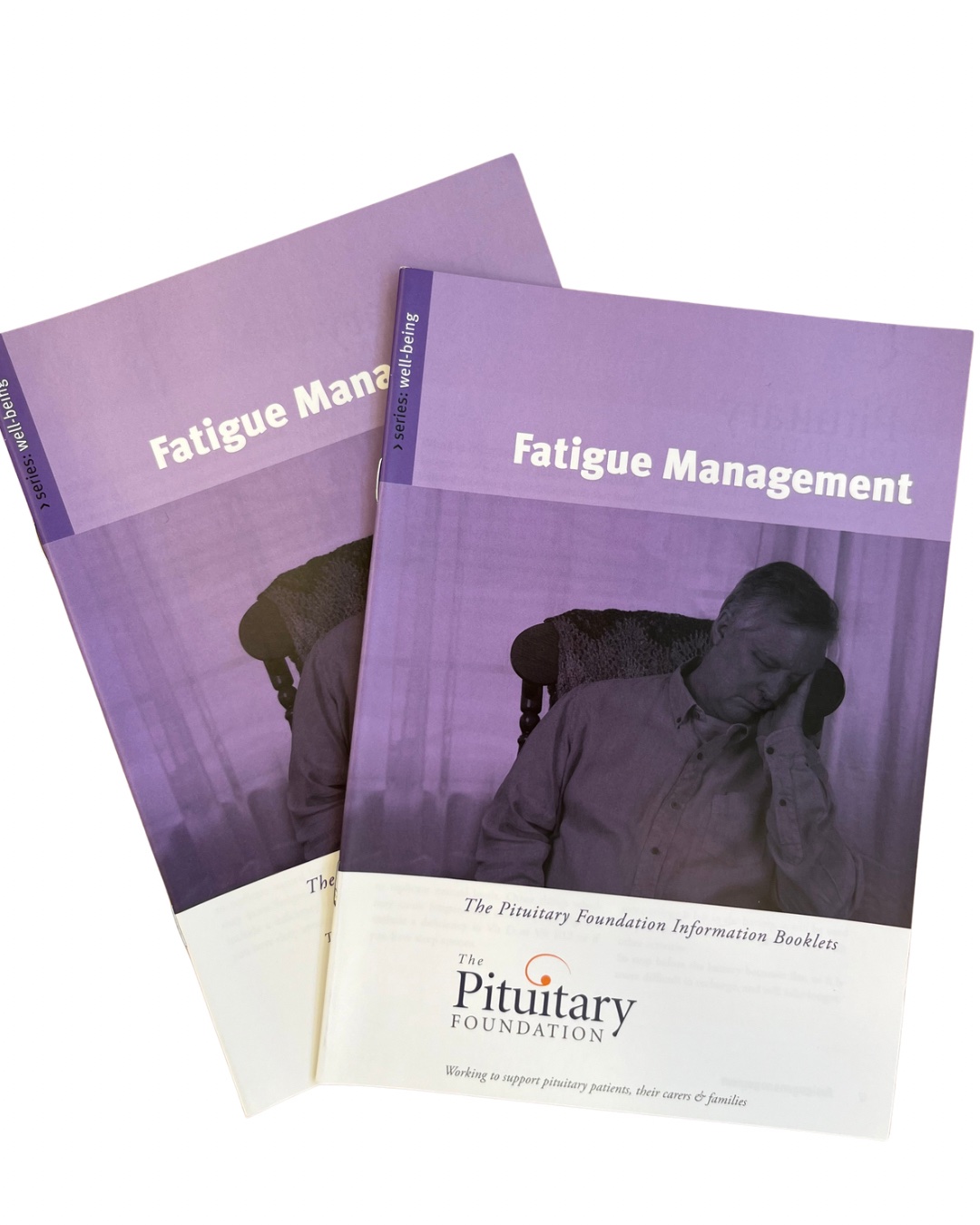
Fatigue Management booklet
This booklet provides information about fatigue and how to manage this.
Fatigue management and pituitary conditions with Professor Niamh Martin
You can also watch the webinar below on fatigue management and pituitary conditions. During this webinar, we were joined by Professor Niamh Martin. Professor Niamh Martin is a Professor of Endocrinology at Imperial College London and Honorary Consultant in Diabetes and Endocrinology and a Consultant Physician at Imperial College Healthcare.

By loading the video, you agree to YouTube’s privacy policy.
Learn more
Join our upcoming events for Pituitary Awareness Month 2026







Have you found this helpful?
If so, please support us to bring useful information to more people affected by pituitary conditions.