




‘I’ve got a headache’, ‘my head hurts’, ‘oh my god I’m so TIRED’, ‘WHY. AM. I. SO. TIRED?!’
I often feel like a broken record these days, but it wasn’t always this way. Aside from the immediate aftermath of a head trauma in 2010, headaches for me used to be reserved for the morning after too much wine, a lack of sleep, or perhaps too much sun on holiday. Despite suffering from insomnia on and off my whole life, I used to be full of energy and stamina, powering through sleep-deprived nights and busy work schedules in my 20’s. I never gave a second thought to my pituitary gland – which I had learned about in school but basically forgotten about – and whether it might be doing okay.
“I never gave a second thought to my pituitary gland – which I had learned about in school but basically forgotten about – and whether it might be doing okay.”
Things took a rapid turn for the worse though in mid-2021, after another (quite minor) knock to my head when I fell off my bike. I was wearing a helmet, but a mild concussion and worse whiplash immediately followed, bringing on months of completely destabilising and debilitating headaches that would leave me unable to function for days.
I ended up in A&E in London hospitals within months, on multiple occasions, because of the pain, but was never even offered a head scan or any kind of relief apart from paracetamol, until I had to seek private neurology treatment at the end of the year.
This coincided with what I now suspect was something akin to a 10-day-long non-acute adrenal crisis that December – but which no one could explain to me at the time – which had me vomiting and in pain all over for two weeks, and the most unwell I had been my entire life (at that point), aged 30.
Even by the New Year I could barely eat anything, constantly ended up drenched in sweat (when I am normally always too cold), permanently felt light-headed, and struggled to even move around my house most of the time, due to the pain and fatigue.
By mid-January 2022, after two MRIs, extensive hormone blood tests, and much angst, I had been diagnosed with a suspected pituitary macroprolactinoma.
Within days of starting hydrocortisone, levothyroxine, and cabergoline, I felt like a new person. Friends, family, and I were understandably relieved that this ‘thing’ was not malignant at diagnosis, but I could never have imagined how much damage it was going to cause me over the next three years.
One month later, in mid-February 2022, I was already admitted to hospital for six days as the unbearable headache had returned. Pituitary apoplexy was diagnosed, but thankfully I recovered reasonably smoothly, apart from a short re-admission the following month, when it was first suspected I might have hypophysitis—inflammation of the pituitary gland. Since my experience was already considered highly unusual for a pituitary adenoma, I was offered a pituitary biopsy in the summer to help potentially reach a clearer diagnosis, but as I felt stable and well, I decided against it. In hindsight, maybe this was a mistake, but we will never know.
In September 2022, having just relocated to Amsterdam, the debilitating headache returned, worsening over two weeks until I was back in A&E along with vomiting, a fever, and a stiff neck. I was diagnosed with bacterial meningitis, and I strongly suspected my pituitary lesion was somehow to blame, but the hospital was reluctant to investigate.
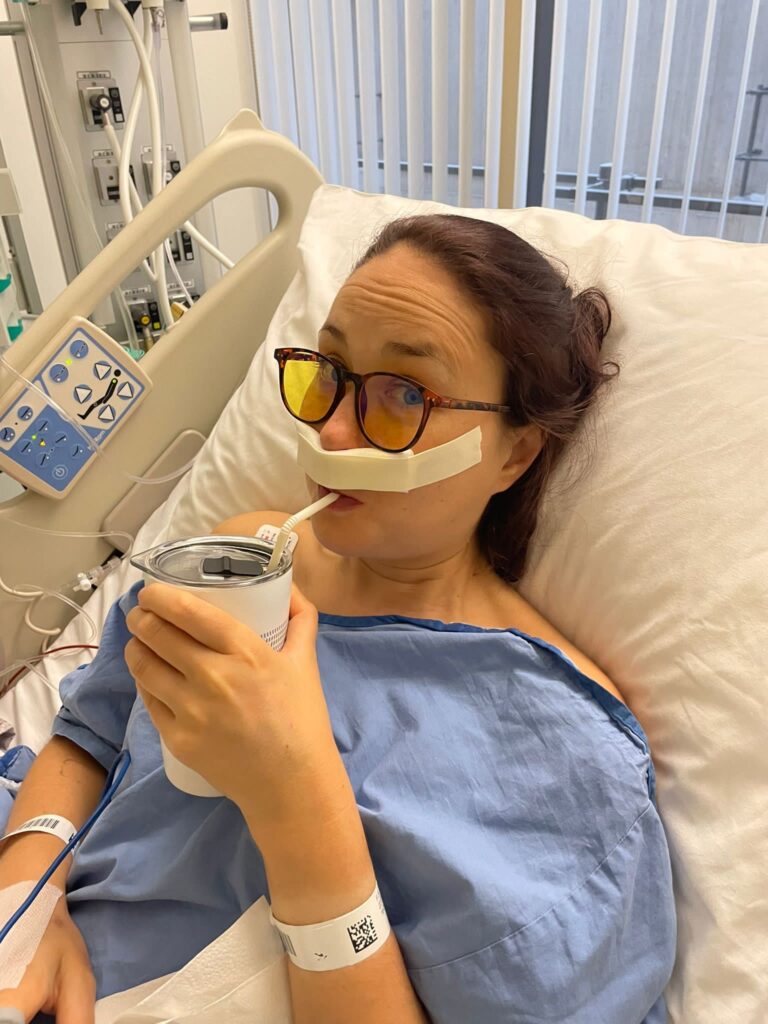
After a difficult two weeks of IV antibiotic treatment in hospital, I went back to finding my feet in Amsterdam, due to start a new job and wanting to feel confident that the worst was over. However, headaches and complete exhaustion persisted, and within a month and a half, I was back in hospital, in the worst physical pain I have ever been in.
I was told that, inexplicably, I had bacterial meningitis again, and I was referred to an academic research hospital in Amsterdam where I stayed for two weeks. There, an MRI suggested I had a pituitary abscess, which was explained as the likely cause of the recurrent meningitis. After being discharged, I was treated with six weeks of IV antibiotics from home for the abscess, which by the end of January 2023 had disappeared on an MRI.
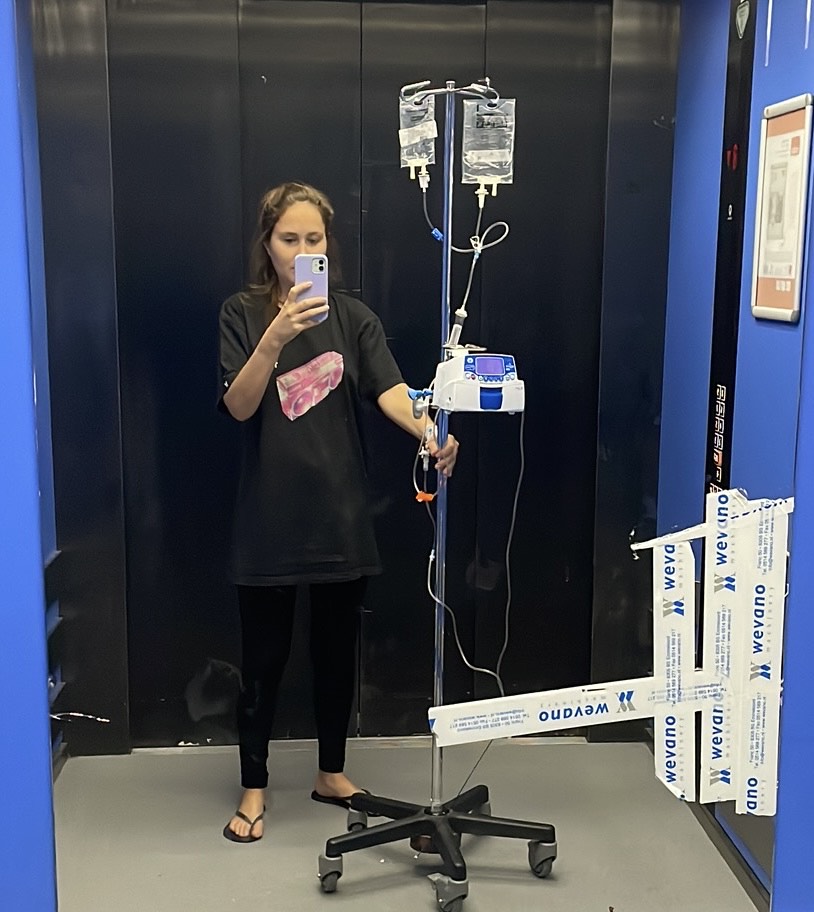
For now, I was feeling a little more positive again.
Eight months later, when I finally felt like I could get my life back on track, I found myself in the grip of a worsening chronic headache episode and an impending sense of doom.
Once again, I was bedbound, unable to tolerate any light, and back in hospital. Devastatingly, the MRI showed the abscess had returned, and two days later I had surgery to take a biopsy and drain the abscess. After almost two weeks in hospital, I was discharged with six more weeks of IV antibiotics, though no causative bacteria were cultured from the biopsy. This had also been the case with the lumbar puncture samples taken when meningitis was diagnosed.
In a nutshell, the very same thing happened in June 2024, but this time, since no bacteria was identified again, a second diagnosis was strongly suspected – chronic hypophysitis, again.
This time, only two months after finishing the antibiotics treatment, I was readmitted to hospital in September 2024, where I agreed to try the treatment for hypophysitis, which is a very high dose of IV steroids. Despite some improvement, two days later my condition rapidly deteriorated. I underwent pituitary surgery for the third time in a year, and nine more weeks of antibiotic treatment was started, alongside the steroid treatment, in case this was in fact a recurrent bacterial infection (abscess).
At the time of writing this (early December 2024), I am still undergoing the IV antibiotics treatment and have only just finished tapering off the high dose of prednisone. As you can imagine, my mental health has been in tatters, and I have felt, and still feel, completely out of control of my body.
I wish I could end on a much more positive note, but this has been the most challenging and traumatising three years of my life in every respect. Until a clear diagnosis is made (inflammation or infection), and a long-term management plan started, it is incredibly hard for me to plan for the future. That being said, it does seem that we are inching towards a diagnosis. There is strong evidence to suggest that I am in fact suffering from a chronic severe and rare form of hypophysitis, which is very difficult to diagnose, and is often misdiagnosed since its effects closely resemble those of other pituitary conditions and diseases.
“My advice would be to become an expert in your symptoms and condition. Secondly, you must push for answers and more tests if something doesn’t feel right.”
My advice would be to become an expert in your symptoms and condition. I have been lucky, in a depressing sense, that I have become highly tuned into the specific type of headaches I get when something is about to go very wrong, meaning I have always sought medical help before it was too late.
Secondly, you must push for answers and more tests if something doesn’t feel right. Understandably, the gland’s delicate position in the body (brain!) makes it difficult to diagnose pituitary disorders with absolute certainty, and my situation has been incredibly unusual and complex. Although many experienced medical teams will search for more rare causes and diseases, all too often only the most common conditions are diagnosed.
Despite the life-changing personal challenges I have been facing, I am (desperately) hopeful that with the help of my dedicated medical teams and my own persistence to get answers, 2025 will be the year I get some closure on my three-year rollercoaster.
An update from Francesca – February 2026
Shortly after submitting my story for the magazine, in January 2025, my condition (predictably) started to return when I woke up one day with an all-too-familiar breed of headache. Conveniently, I already had an MRI booked for a few days later, which confirmed another flare-up.
This time, due in great part to me advocating for myself and insisting on it, I was immediately put on a very high dose of IV prednisolone pulse therapy for three days, before another tapering course of oral steroids. Thankfully things stabilised, so we knew for sure it couldn’t be an infection, as if it was the immunosuppressive effect of the steroids would have caused it to progress rapidly.
I was finally diagnosed with suspected autoimmune hypophysitis, though the exact cause is still unknown. I’m now medically stable on immunosuppressants/steroid-sparing agents which has had a hugely positive effect on all areas of my life. I still struggle a lot with frequent headaches, fatigue and fluctuating energy, but the present and future is now so much brighter than before.