




Many people living with pituitary conditions depend on daily medications to manage their health. These medications may be necessary to prevent life-threatening situations, such as adrenal crisis or hyponatraemia. Other medications may be essential to maintain general wellbeing and prevent ill-health.

These essential medications include
- Hydrocortisone
- Prednisolone
- Desmopressin
- Oestrogen
- Testosterone
- Levothyroxine
We believe it is important that those who take essential hormone replacements have prescriptions that issue at least a three-month supply of medication. This is to prevent you from running out and to avoid inconvenience with the regularity of prescription requests. For some medications, like glucocorticoids, it is necessary to have extra supplies to allow you to increase your dosing when following the Steroid Sick Day Rules. Having a longer prescription helps with this.
Earlier this year, we became aware that many people are having trouble getting longer prescriptions for their hormone replacement medication. In response, we launched the ‘prescription of essential meds’ project, to find out more about this issue and provide support for those affected.
What this project involved
- Surveying our community about their prescription lengths
- Creating template letters that you can use to ask your GP for longer prescriptions
- Creating an ‘Adrenal Insufficiency Action Plan’ to support those with adrenal insufficiency
- Submitting our survey research to the Society for Endocrinology BES conference, to raise awareness of this issue with clinicians
Why are longer prescriptions needed?
Having a prescription that only gives you one or two months’ supply can make it harder to manage your health and medication dosing. Shorter prescriptions mean more frequent requests to your GP, more trips to the pharmacy and less medication security if you lose some, are travelling or if there are supply issues. Having to manage all of this can be stressful and cause anxiety for people who may already be dealing with the stress of a long-term health condition.

Why is this important?
Having longer prescriptions is especially important if you take life-sustaining medication, such as desmopressin or steroids. For those who take steroids, having longer prescriptions is also important to ensure you have enough extra medication to increase your dosing when following the Steroid Sick Day Rules, to prevent an adrenal crisis.
The National Institute for Health and Care Excellence (NICE) recommends that patients with adrenal insufficiency “maintain a good supply of oral medicines at all times, including when travelling or moving between places of residence and [know] how to obtain additional supplies if needed for sick day dosing.” Therefore, it is very important that people with adrenal insufficiency can get longer prescriptions and have extra supplies of steroid medication.
Our prescription length survey
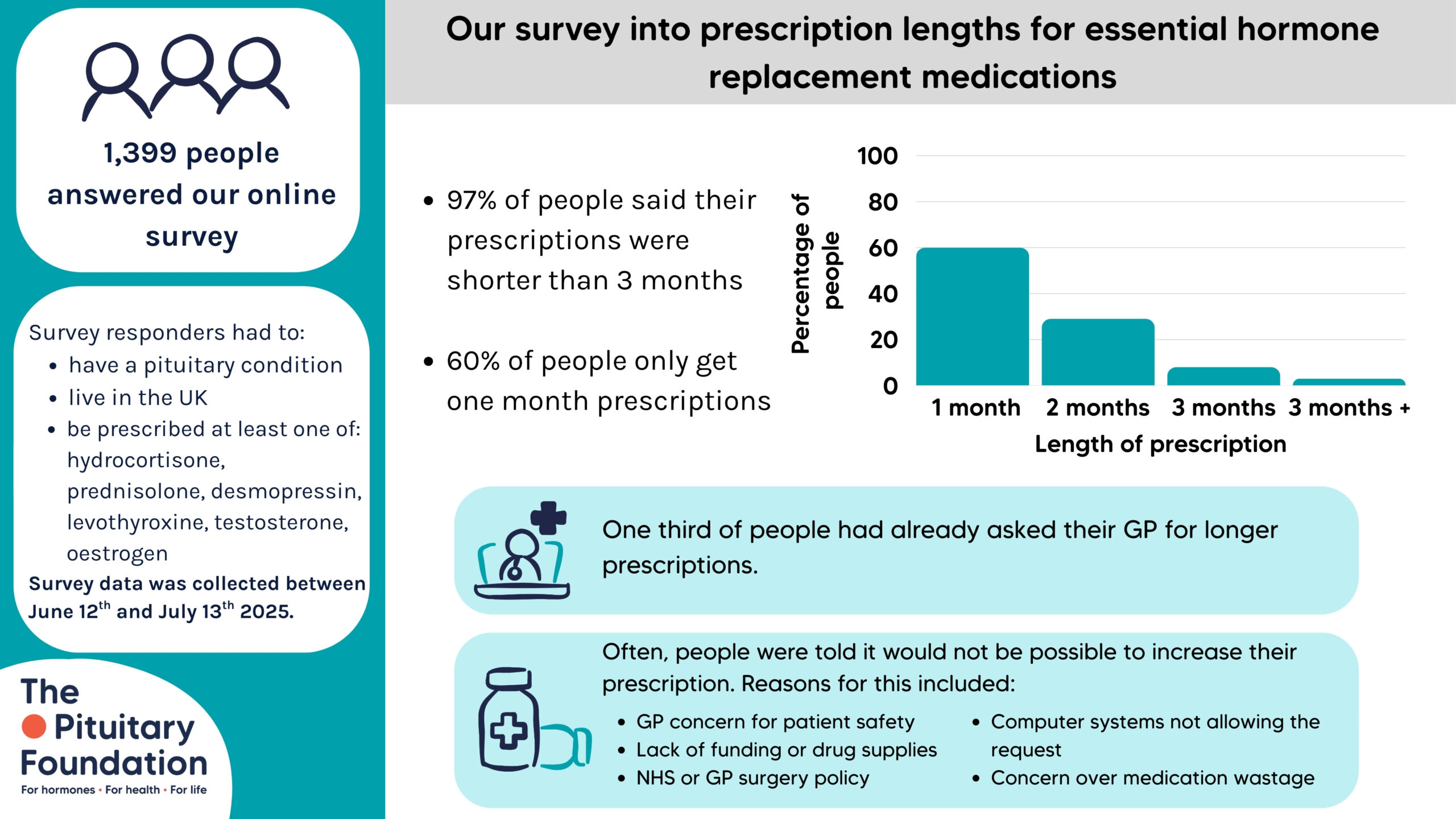
We wanted to find out how many people are not receiving longer prescriptions, so we turned to our community for help. We surveyed over 1,300 people with diagnosed pituitary conditions, who had been prescribed at least one of the essential hormone replacement medications listed above.
From the 1,399 people surveyed, 97% had prescriptions that were for less than three months. 60% of people surveyed only had prescriptions for a one-month (or 28-day) supply. You can see the summarised results below.

This work was carried out in collaboration with Addison’s Disease Self-Help Group, who also shared a similar survey focusing on prescription lengths for steroid medication. Between our two organisations, we received over 1,700 responses.
We want to thank everyone who took part in these surveys. The data has provided valuable insights into an issue affecting many in our community, and has enabled us to come up with recommendations and materials that patients and clinicians can use to address this.
Materials to support you
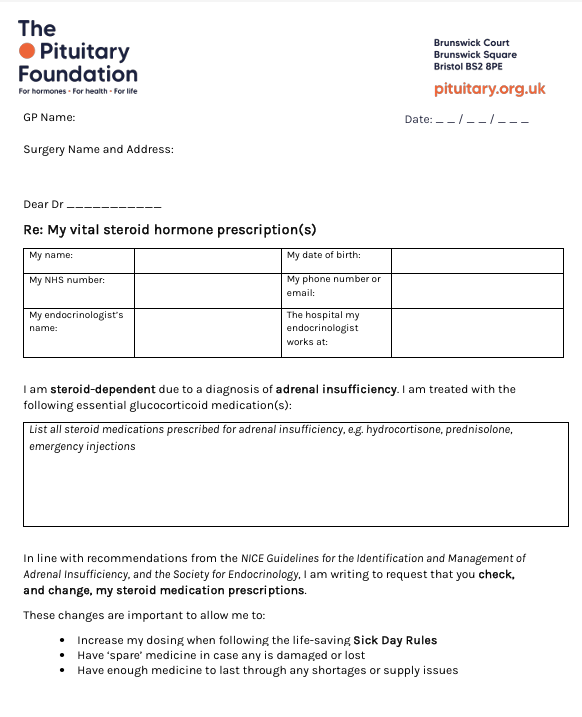
Steroid prescription letter
Use this letter to ask your GP for a 3-month prescription of your steroid medication, for your adrenal insufficiency.
Download for free or order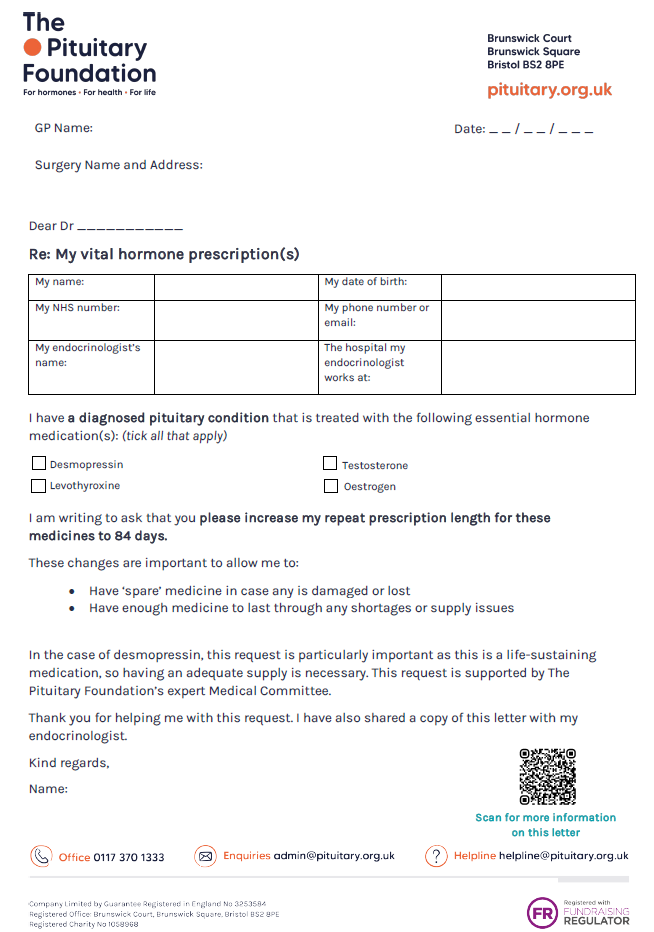
Hormone replacement prescription letter
Use this letter to ask your GP for a 3-month prescription of your hormone replacement medication. This includes:
- desmopressin
- oestrogen
- levothyroxine
- testosterone
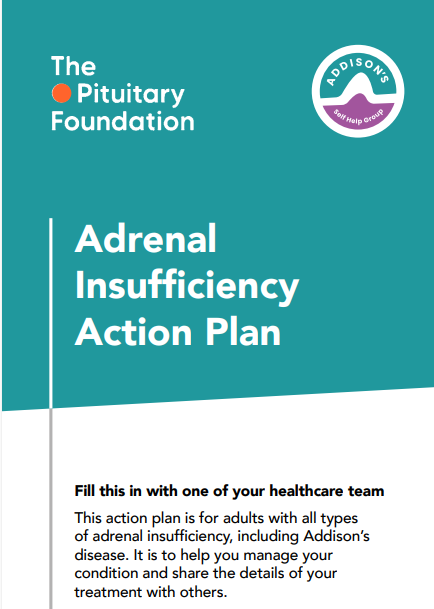
Adrenal Insufficiency Action Plan
This action plan is a useful resource for anyone with adrenal insufficiency or Addison’s disease, to record essential medical info and share with others to make them aware of your condition.i
Download for free or orderOur recommendations for patients
As a patient, there are some things you can do to raise awareness of your condition and why you need longer prescriptions.

Share our template letters with your GP
Fill out and share these letters with your GP to request longer prescriptions of essential hormone medications. If you have take steroid replacements and other hormone replacements, use both letters.

Fill out and share the Adrenal Insufficiency Action Plan
If you have adrenal insufficiency, use our Action Plan to tell others about your condition and medication needs. This Action Plan also has helpful reminders of the Sick Day Rules and signs of adrenal crisis.
Our recommendations for clinicians
If you are a clinician, please follow these recommendations to support your patients living with pituitary conditions.
Support your patients with their requests for longer prescriptions
Ensure your patients have access to a three-month prescription for their essential hormone medications and prompt this on clinic letter outcomes. For patients with adrenal insufficiency, this is particularly important to allow them to follow Sick Day Rules and prevent an adrenal crisis.
Provide a separate supply of steroids to patients whose medications are dispensed in a dossette box
For patients with adrenal insufficiency whose steroids are dispensed in a dosette box, it is essential to provide a separate supply of steroids, to allow patients to increase their dose when following the Sick Day Rules.

Share our template letters with your patients
Share our template letters with your patients and support them in asking their GPs for longer prescriptions.

Share the Adrenal Insufficiency Action Plan with your patients
Share this action plan with your patients who have adrenal insufficiency or Addison’s disease, to support them in managing their condition.
Getting the word out to clinicians
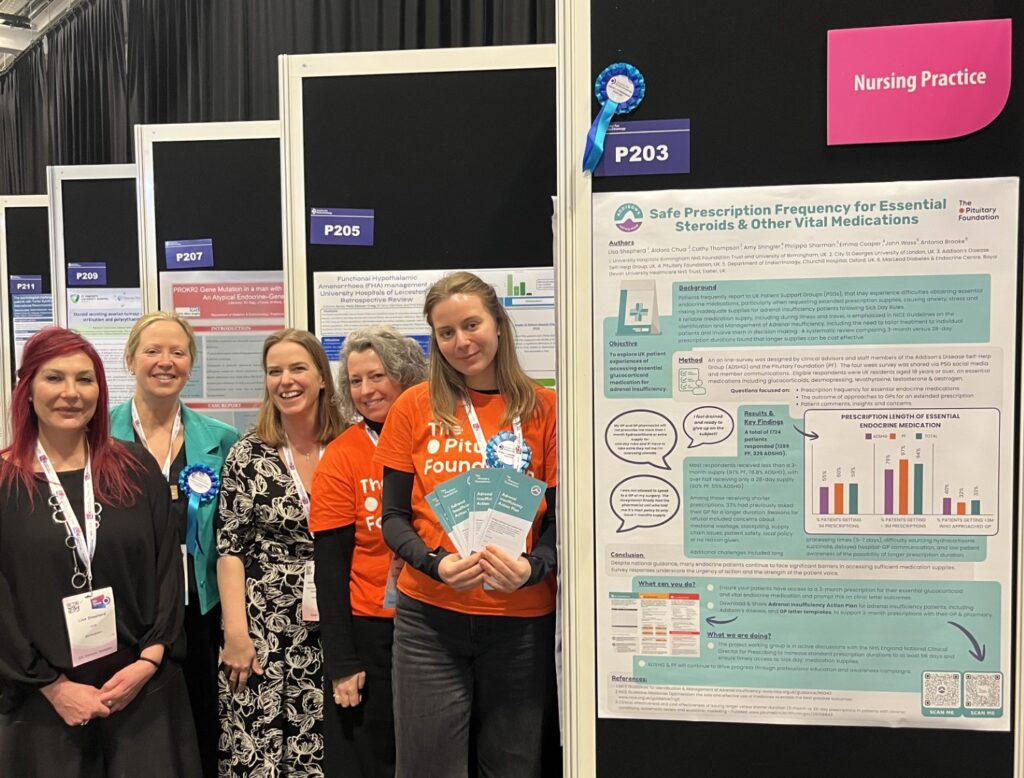
In March, The Pituitary Foundation and Addison’s Disease Self-Help Group took our survey findings to the British Endocrine Society conference!
We spoke with many endocrinologists, nurses and other healthcare staff about this research and what they can do to support their patients. Our research poster was also awarded a ‘highly commended poster’ award.
Tell us what you think
We want to know what you think of our template letters and action plan. We also want to know how GPs respond to the template letters, and if they help you to get longer prescriptions. We are also interested in hearing from clinicians, to know if these materials are useful to your practice and patients.
If you have feedback on these items that you would like to share, please let us know by emailing [email protected]
Frequently asked questions
The template letters have all the information your GP needs to know, to increase your prescription lengths. All you need to do is fill in your personal details (such as your name, NHS number, endocrinologist details and what prescriptions you take) and give this to your GP.
You can download the letters for free from our website, and either send them digitally or print them out yourself. You can also order paper versions from us. These will be sent to you in the post. We charge a small fee for this, to cover printing and postage costs.
Yes. We think it would be a good idea to also send these letters to your endocrinologist, to let them know that you have made this request of your GP.
If you have adrenal insufficiency and another pituitary condition that needs treatment with one of the other hormone replacements listed, you should use both letters. Fill out both letters and share them with your GP. You may also want to let them know that you are sharing two similar letters about this, to make sure they are both responded to and not assumed to be the same.
- NICE guidelines for managing adrenal insufficiency: These government guidelines outline how adrenal insufficiency should be diagnosed and treated in the UK. They provide information on Sick Day Rules, clinical management and advice for prescriptions and medications. They are made for clinicians to follow but they can also be helpful for patients who want to know more about their treatment.
- Society for Endocrinology guidance on Sick Day Rules: Information for patients and clinicians on how to follow the Sick Day Rules
- BMJ e-learning module on adrenal crisis: An online learning course for medical professionals to help you spot the signs of adrenal crisis and know what to do