




The future of cortisol testing
We recently welcomed Professor Miguel Debono, consultant endocrinologist and clinical director of diabetes and endocrinology at Sheffield Teaching Hospitals, to discuss his research into the use of saliva rather than blood in cortisol testing.
Why do we test cortisol?
Cortisol is tested when there is a suspicion someone is producing too much or too little cortisol. When low cortisol is suspected, cortisol will be measured at the peak of natural cortisol production, usually first thing in the morning. When high cortisol is suspected, cortisol may be measured at night, as this is the lowest point of natural cortisol production.
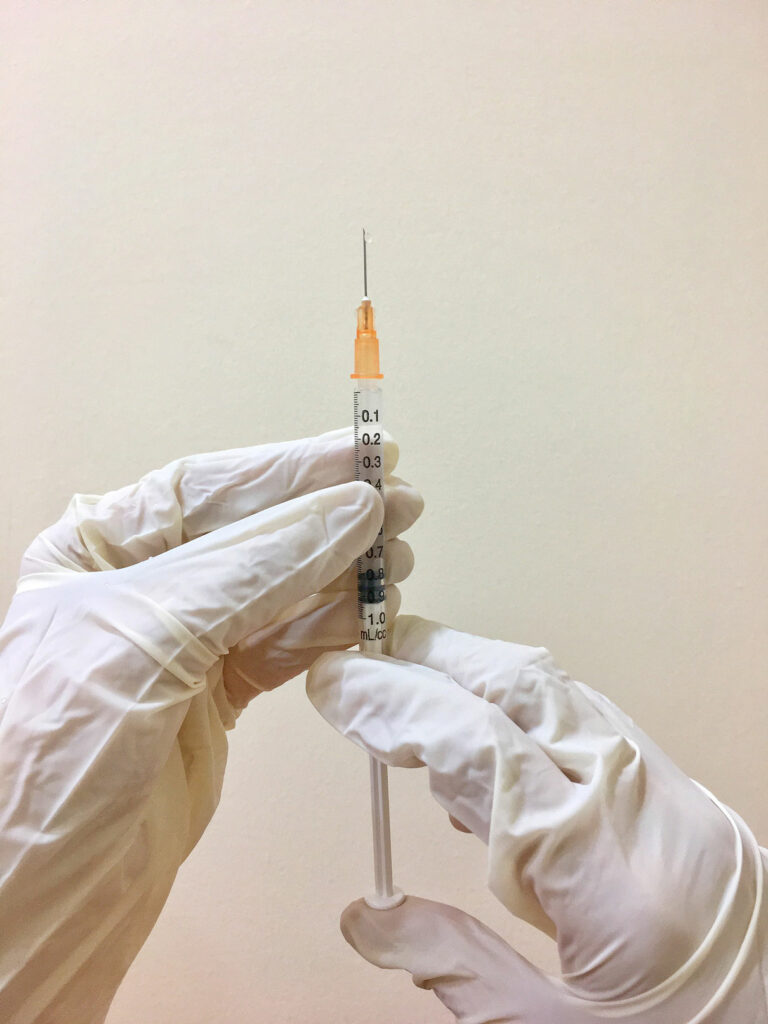
The most common method for testing cortisol is a blood (serum) cortisol test. This test takes place in the morning in hospital.
Professor Debono’s research instead makes a clinical case for the use of saliva as a method for testing cortisol.
Advantages of salivary cortisone testing
The salivary cortisone test takes place at home and patients will provide their own saliva sample. This is a much less invasive approach to traditional blood tests, with no needles involved.
To take a saliva test using a salivette, adult patients will chew a swab for around a minute, then package up the swab and return this to the endocrine clinic by post. The test can stay stable for up to five days, meaning the results will still be accurate when they reach the clinic even if there are some delays in the post.
The saliva test takes place in familiar surroundings and avoids the additional stress of being in a hospital environment. The stress of travelling to and being in hospital can cause higher stress levels in many people, which can affect the results of a cortisol tests. 80% of patients in Professor Debono’s clinic preferred taking the test at home.
The salivary cortisone test is very low cost. The hospital-based blood test costs around £398 per test, whereas the postal saliva test costs £20 per test. The deduction in cost could see estimated national savings of £24 million per year.
The deduction in cost could see estimated national savings of £24 million per year.
Why does spit work as well as blood?
The results of salivary cortisone tests are very accurate. In a recent study, Professor Debono identified 115 patients without adrenal insufficiency and 89 with adrenal insufficiency using saliva cortisone tests. These patients had participated in the previous NIHR-funded diagnostic accuracy study in 2020. Five years later, none of the 115 patients without adrenal insufficiency had developed adrenal insufficiency, showing the test was accurate initially.
Saliva cortisone testing can also be used to detect too much cortisol and diagnose Cushing’s disease. Using late night at home testing, the saliva cortisone test was 100% sensitive.
Using late night at home testing, the saliva cortisone test was 100% sensitive.

By loading the video, you agree to YouTube’s privacy policy.
Learn more
Key takeaways:
- Patients with pituitary lesions are at risk of developing adrenal insufficiency and should be screened
- Waking salivary cortisone is an accurate, evidence-based screening test for adrenal insufficiency
- Midnight saliva testing also helps screen for Cushing’s disease, and to check for its return after treatment.
- Home saliva testing is cheaper than hospital testing and patients consistently prefer it.

Questions from the audience
Could saliva cortisol or cortisone testing be used to help optimise the timing of hydrocortisone replacement therapy?
Yes. Here’s a more cohesive and logically ordered set of questions that you could ask an endocrinologist or researcher: In most circumstances we would not usually recommend measuring cortisol to optimise hydrocortisone replacement treatment but if needed saliva cortisone not cortisol can be used.
Could saliva cortisol or cortisone testing eventually be introduced in GP care to help identify possible endocrine disorders earlier, before referral to an endocrinologist?
Yes, eventually when resources are available GPs will be able to request this test to help identify endocrine disorders.
If testing is currently limited to specialist laboratories, how likely is it that saliva cortisone testing will become more widely available across NHS hospitals in the future?
At present, NHS trusts can request waking salivary cortisone testing and send samples to a central laboratory for analysis. Over time, individual trusts may establish their own local laboratory assays for measuring cortisone in saliva, provided they are satisfied that the analytical method is sufficiently accurate, reliable and cost-effective. This approach would allow trusts to develop local testing capacity while maintaining appropriate standards of quality and clinical governance.
More broadly, how do you see saliva-based testing changing the diagnosis and management of adrenal and pituitary disorders over the next 5 to 10 years?
We are currently undertaking an NIHR-funded Health and Social Care Delivery Research study to establish the processes required to implement waking salivary cortisone testing across NHS trusts. The findings will provide a practical framework that can be used by NHS trusts to establish saliva testing pathways for the investigation of adrenal and pituitary disorders. Given that saliva testing for cortisone is accurate, offers significant benefits to patients, and has the potential to reduce healthcare costs, we anticipate that its use will become increasingly widespread across the NHS over the coming years.


Have you found this helpful?
If so, please support us to bring useful information to more people affected by pituitary conditions.