



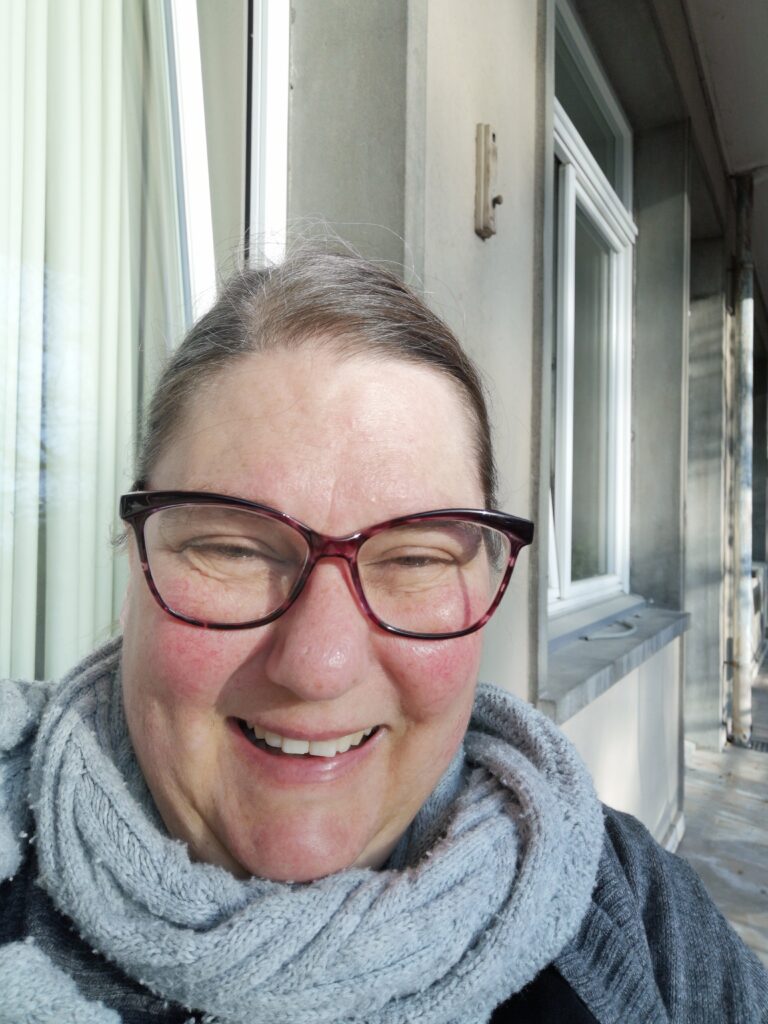
Basel University Hospital are currently investigating the role of Oxytocin in people with pituitary conditions. The synthetic form of the hormone already exists in Maternity care but increasingly there is evidence to suggest that people with pituitary conditions might benefit from topping up their Oxytocin levels. Shelley has been taking part in the OxyMOTION research project with the Swiss team in Basel. Here is her account of how it went.
In 2025 I saw mention of the OxyMOTION research project on the Pituitary Foundation website and then again when attending a webinar on AVP-D. I got in touch with the team in Basel and before I knew it I was negotiating dates with Dr Broman at Basel University Hospital.
I have AVP-D and Controlled Cushing’s with no steroids (my cortisol levels have been naturally stable since surgery and radiotherapy) which made me a suitable candidate. I was aware that this was not like a clinical trial where we would potentially improve or fix my personal hormonal glitches. It was much more about loaning out my ‘pituitary environment’ for the purposes of scientific (and my own) curiosity, with the hope that it would move the dial forward in our understanding of the benefits of Oxytocin.
Before agreeing to participation I carefully weighed up whether this was worth the time and energy and possible/probable discomfort and risks. On balance, it was the right thing for me.
My first study visit was in early March 2026 – the weather in the UK was still weirdly wintry but Basel had beautiful spring sunshine and blossom. What a pleasure!
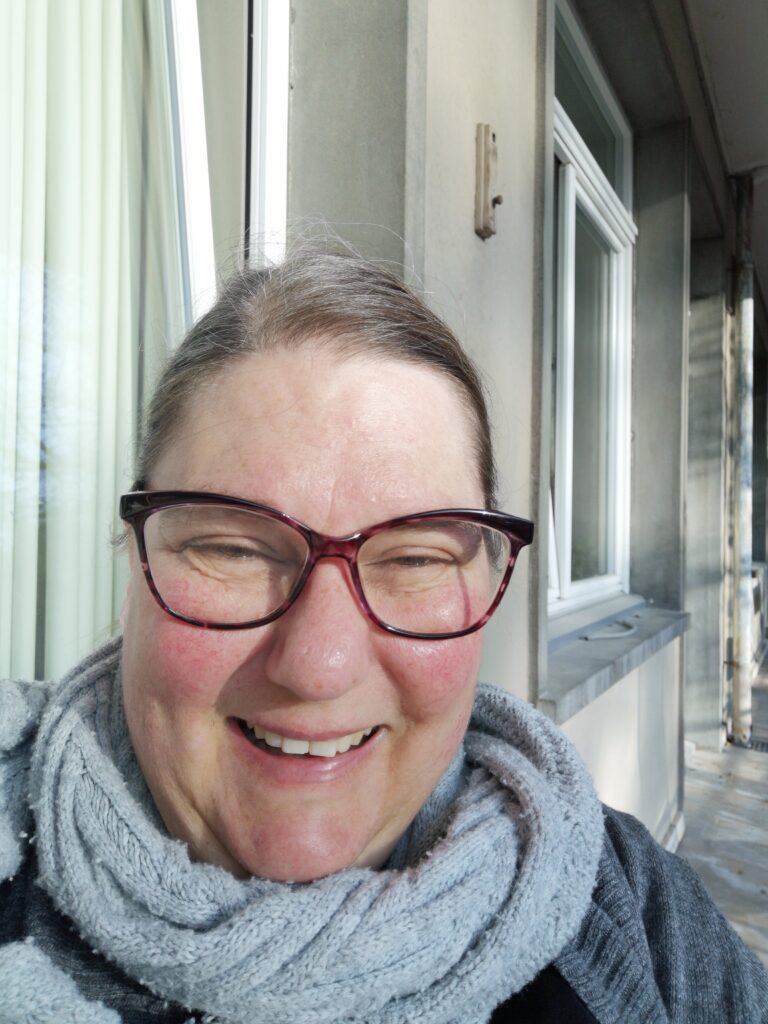
This was my first time travelling to Europe for 11 years. It was my first time going to an unknown destination, on my own, for 15 years. I was nervous.
I needn’t have worried. In many ways, Basel is the perfect place to regain your tourist legs. It’s easy to navigate and uncrowded. In fact I landed on a weekend evening and the airport seemed almost empty. If you have accommodation booked you can travel for free on the trams and buses in Basel so there’s no immediate panic about how to get set up, you simply board the no 50 bus and 20 minutes later you’re in the city centre.
Dr Broman had booked me into a hotel a short walk from the hospital. It is in a beautiful part of town, very old and historical. The hotel itself is a converted seminary and has a peaceful, reverential atmosphere – ideal for unwinding after sessions in the laboratory.
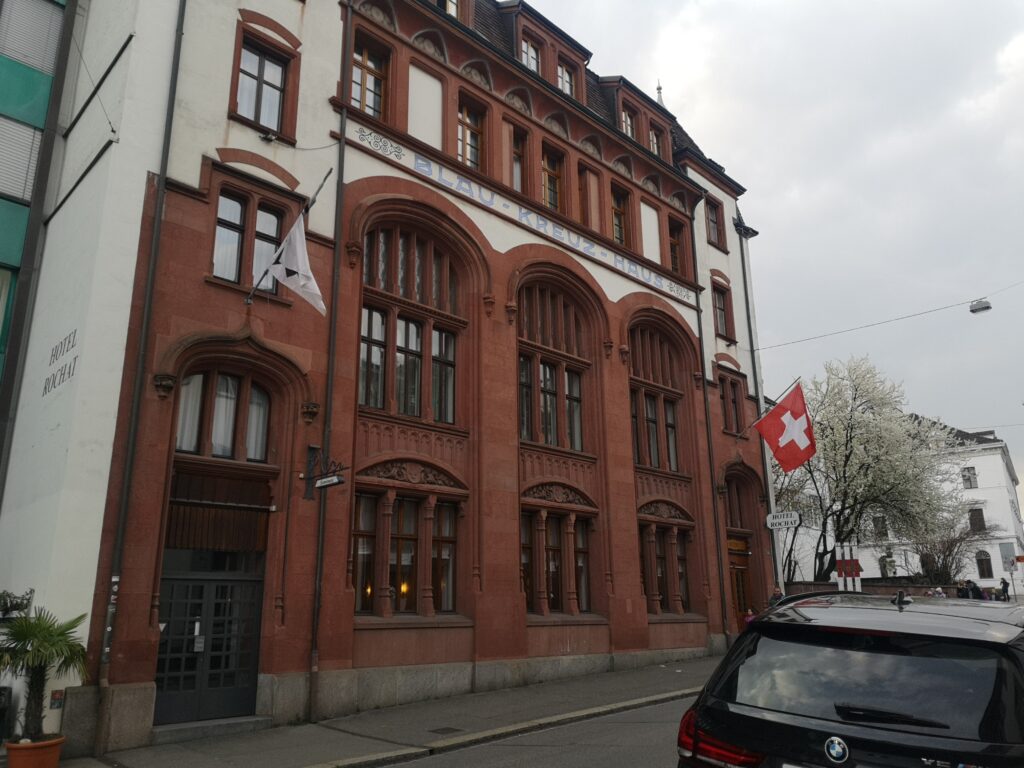
The ‘science bit’ took one full day and then the next morning. I flew home that evening after finishing. It was possible to arrive in Switzerland earlier and stay another few days to do some travelling around. I opted to keep it simple. The university covered my travel to and from Basel and the hotel for the night before and the night between the 2 lab days. The only thing I spent money on was lunch and dinner (the hotel does an excellent breakfast and hot drinks all day). With coffees nearing £6 a cup, eating was not cheap but high quality. There are 2 restaurants right next door to the hotel and I had lovely meals at both of them.
The OxyMOTION study is a crossover study meaning that I received both Oxytocin and a placebo (nasal spray) and that nobody in the room knew which day had which.
In terms of the content of the research, it involved a lot of measuring my state of being – blood pressure, cortisol levels etc and answering questions about my emotions before and after administering the nasal spray. I also had to complete exercises about recognising emotions, looking at pictures of faces and body language. There was the odd difficult moment – I have quite tricky veins so it was a team effort to successfully install a canula. I am quite used to this being the case and with some determination we got there in the end. My experiences of things like day curve tests and midnight salivas meant that a lot of the physical demands felt familiar and tolerable.
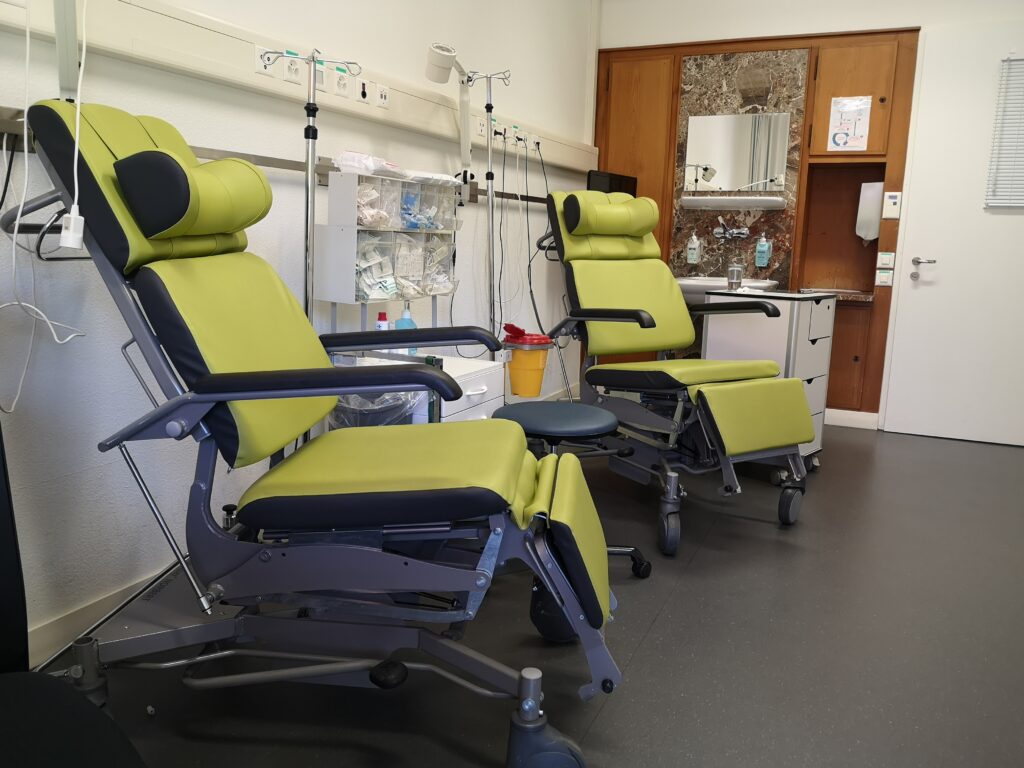
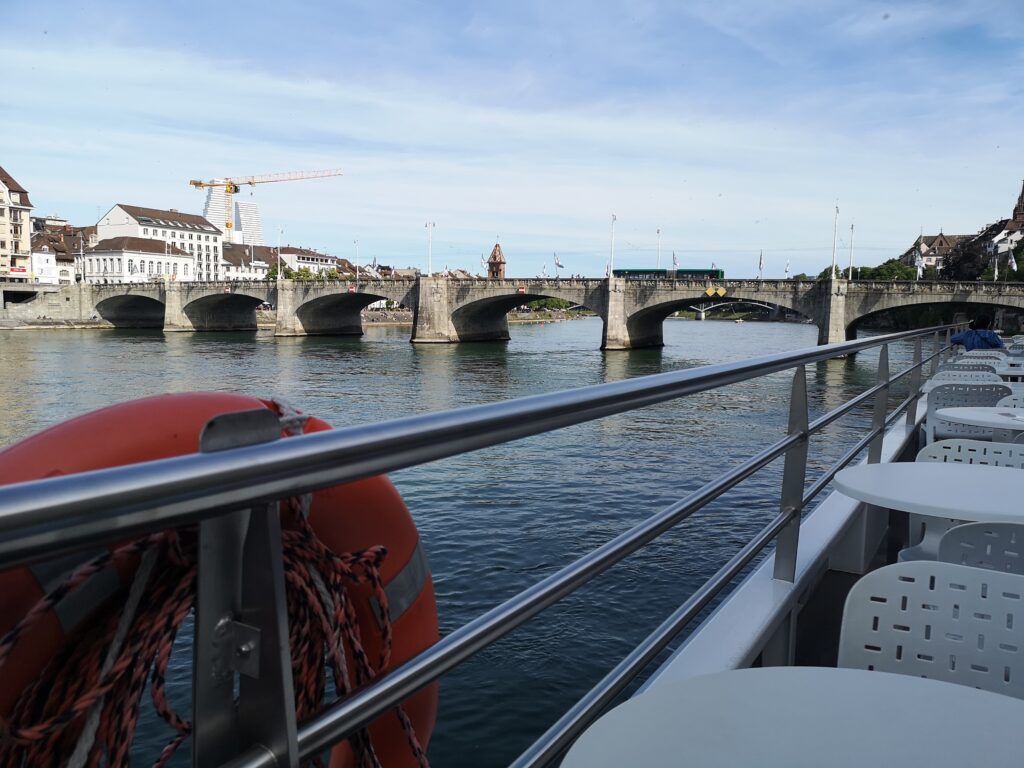
8 weeks later, I repeated the process. The second visit was in many ways even better. Being familiar with where I was going, who I was working with and what I would be doing meant I had more energy to enjoy my surroundings. The days in the lab were also shorter so there was more time to be a Basel resident. During the Spring visit I had seen people embarking a river cruiser – I was intrigued.
The River Rhine cuts Basel from East to West and is an impressive swathe of water. So much of the city happens along its banks. In the weeks leading up the Summer visit I found the river trips online and booked myself a 15 euro ticket for a 5pm cruise. It turned out to be the most beautiful summer evening , sunny but not too hot. It was a mixture of locals and tourists onboard – seemingly lots of people take to the water post-work for a glass of wine and a plate of cheese and olives. Super! It was a 2-hour circular route that gave fascinating 360 degree views of the city from the water. A truly excellent and relaxing way to spend the ‘middle evening’.
My trips to Basel were refreshing on so many levels. Apart from the enjoyable touristic aspects, I found being part of clinical research and working with the dynamic, professional team at Basel University Hospital was a positive experience from start to finish. I was treated like a partner in the process and it felt so good to be part of something that could very possibly improve lives (including my own) in the near future.
Thank you again to Dr Broman and the team!
The OxyMOTION study and OxyPLEASURE study
The OxyMOTION study research team is currently still looking for participants. If you would like to get involved, see our website for more information.
The OxyMOTION research team is also conducting another oxytocin study, “OxyPLEASURE”, which focuses on partner interaction, intimacy and sexual well-being . Please see our website for more information on the OxyPLEASURE study.

Find out more about the OxyMOTION study!
The OxyMOTION study
Find out more about the OxyPLEASURE study!
The OxyPLEASURE study
Have you found this helpful?
If so, please support us to bring useful information to more people affected by pituitary conditions.