





Why pituitary tumours cause visual problems
You have two optic nerves – one behind each eye. Optic nerves act like cable wires that send information from your eyes to your brain. This allows you to see. These two optic nerves meet and partially cross over at the base of your brain at an area called the optic chiasm.
The pituitary gland sits very close to the optic nerves and optic chiasm, just behind your eyes.
Because of this, a pituitary tumour (pituitary adenoma) can touch or press on these nerves, often at the chiasm. When this happens, the nerves can no longer send visual information properly, which can lead to eyesight problems.
If you have a larger tumour (also called a macroadenoma), you have a higher risk of developing vision problems. This is because the tumour is more likely to press on your optic nerves and optic chiasm.
What eye problems can you have with a pituitary tumour?
Blurred vision: This is when objects you see look unclear or out of focus.
Double vision: This is when you see two images of a single object at the same time.
Reduced peripheral vision: This is when you find it hard to see anything that is not directly in front of you.
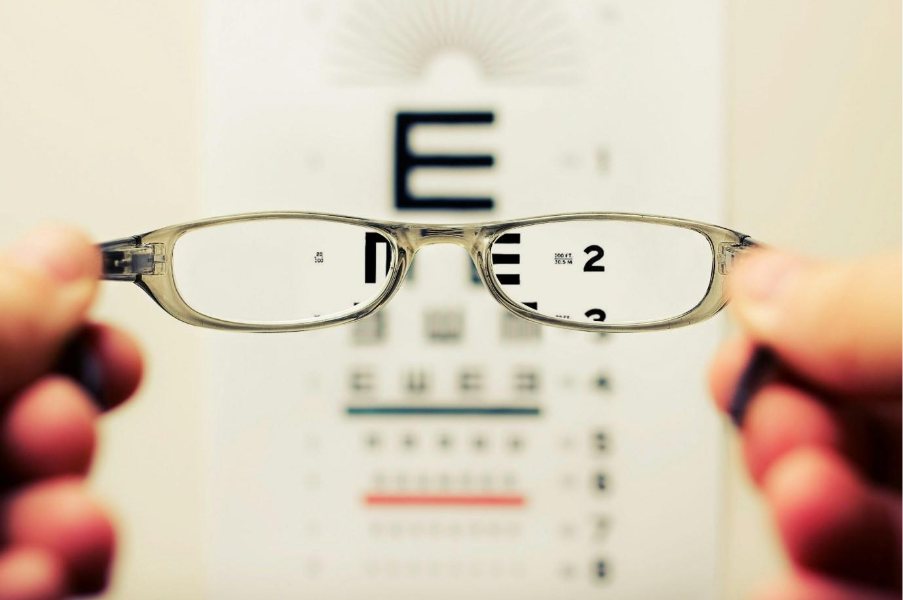
You may find out you have a pituitary tumour after an eye test. This can happen when you notice changes to your vision and get your eyes tested, or after a routine eye test. You may then be told that you have lost part of your vision, which is called visual field loss. This could lead to you having further tests done such as an MRI scan which may find that you have a pituitary tumour.
It can be scary to be told you have a pituitary tumour after what may have been a routine eye exam. If you are diagnosed with a pituitary tumour, it’s important to know these are often benign (non-cancerous) and that treatment is available.
Finding out you have eyesight problems after getting diagnosed with a pituitary tumour
Your endocrine doctor will likely arrange for you to have an eye examination after you are diagnosed with a pituitary tumour, particularly if the tumour is close to or touching the optic chiasm.
After you are diagnosed with a pituitary tumour, it is important that you have an eye examination, especially if you have problems with your eyesight. This is because an eye examination can look for eye issues which may be caused by your pituitary tumour.
If you are having problems with your sight and have not had an eye exam, you should speak to your GP or endocrinologist about this.
What to expect at your eye exam
Below are some of the tests you may have:
Visual field test
Peripheral vision is how well you can see objects you are not directly looking at, outside of your central vision. If your pituitary tumour is pressing on your optic nerves, this can affect your peripheral vision.
A visual field test is used to measure your peripheral vision and can help to monitor your pituitary tumour. During this test, you will be asked to look straight ahead and press a button every time you see a flash of light appear.
Visual acuity test
This test is used to measure how well you can see at a specific distance.
During this test, you will be shown a chart with letters of different sizes. You will be asked to read the letters out loud.
OCT scans (also known as Optical Coherence Tomography)
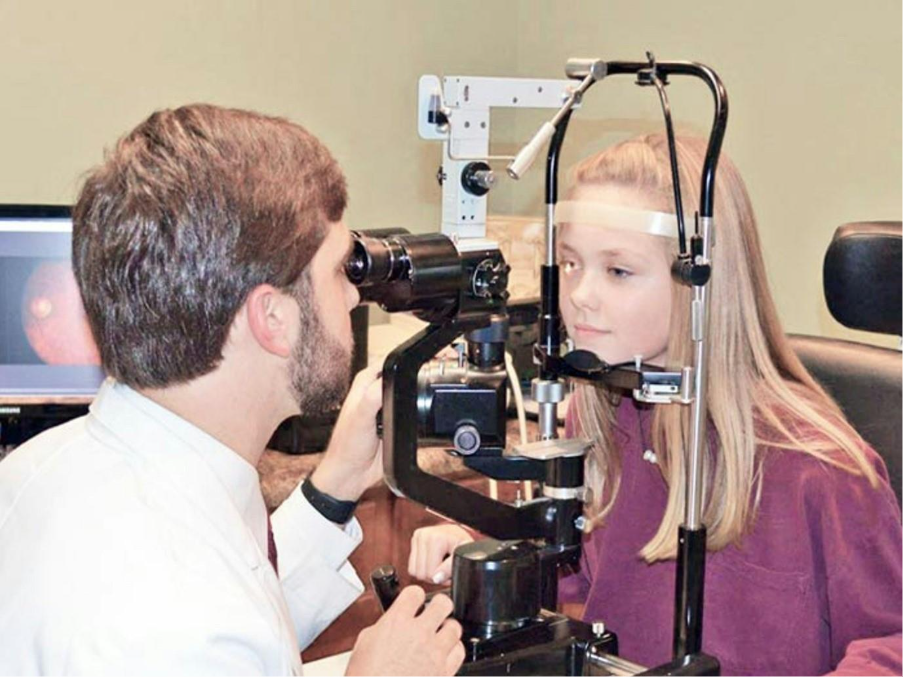
This scan shows detailed images of the back of your eye, including the optic nerves. It can be used to check if the tumour is putting pressure on them and can also be used to monitor for any signs of change.
During this test, you will be asked to rest your chin on a machine. The machine will then take a scan of your eye, which should take a few minutes. The machine will not touch your eye and this scan is completely painless.
Monitoring your eyesight after a pituitary tumour diagnosis
After you are diagnosed with a pituitary tumour, you need to get your eyes tested regularly. This is often every 6 to 12 months but your healthcare team should advise you on how often you should have an eye exam.
If you notice any changes to your vision, it is important to contact your eye specialist or medical team.
Driving restrictions
The Driver and Vehicle Licensing Agency (DVLA) handles driving licenses in the UK.
The DVLA needs to know about any condition you have for over 3 months that could impact your ability to drive. You therefore must tell the DVLA if you have a pituitary tumour AND either:
- you do not have a normal field of vision – you can ask your optician to check this
- you’ve had surgery known as a cranioectomy
Many people with a pituitary condition can drive, but you need to check with your GP.
You can read more about this on our information page about driving restrictions.
How to look after your vision after pituitary tumour surgery
Before your surgery
You may have surgery to remove your pituitary tumour. Before your surgery you may be seen by a member of the ophthalmology team. This is usually done when the pituitary tumour is in contact with the optic nerves.
After your surgery
After surgery you will need to stay in hospital for a few days. Before you are discharged from the hospital, you may be asked if you have any problems with your vision. This will often happen if you had problems with your eyesight before your surgery.
If the tumour was pressing on your optic nerves, your vision may improve after surgery. This can sometimes happen quite quickly. People who had mild or recent vision problems often notice the most improvement.
If your vision problems were severe or long-standing, you may still have some ongoing issues even after treatment.
Who might you see in an eye clinic?
Ophthalmologist: A medical doctor that diagnoses and treats eye problems.
Ophthalmic technician: A healthcare professional that helps the ophthalmologist by carrying out tests such as visual fields and OCT imaging.
Specialist orthoptist: A healthcare professional who can diagnose and treat problems with your eye movements. They can also diagnose and treat problems with your binocular vision. This means how well your eyes work together. Orthoptists may work in pituitary clinics as part of your care team.
Who you see about your eyesight will depend on which hospital your care is under and what services they have in place. You may be directed to see your local optician for your usual routine eye test if there is a lower risk of eye problems. Please speak to your endocrinologist to find out what is necessary in your care and who may carry out your eye test.

Have you found this helpful?
If so, please support us to bring useful information to more people affected by pituitary conditions.