



On Saturday 6th December, not that far from the frenzied streets of Central London, members of the Pituitary Community gathered in the relative tranquillity of the basement lecture theatre of 33 Queen’s Square – The National Hospital for Neurology and Neurosurgery.
We were a mixed crowd of those who live with and alongside pituitary conditions and those who work in the field, including members of the UCL Pituitary Surgery PAG (Patient Advisory Group), LAPPS (London Area Pituitary Patients Support) and the Pituitary Foundation.
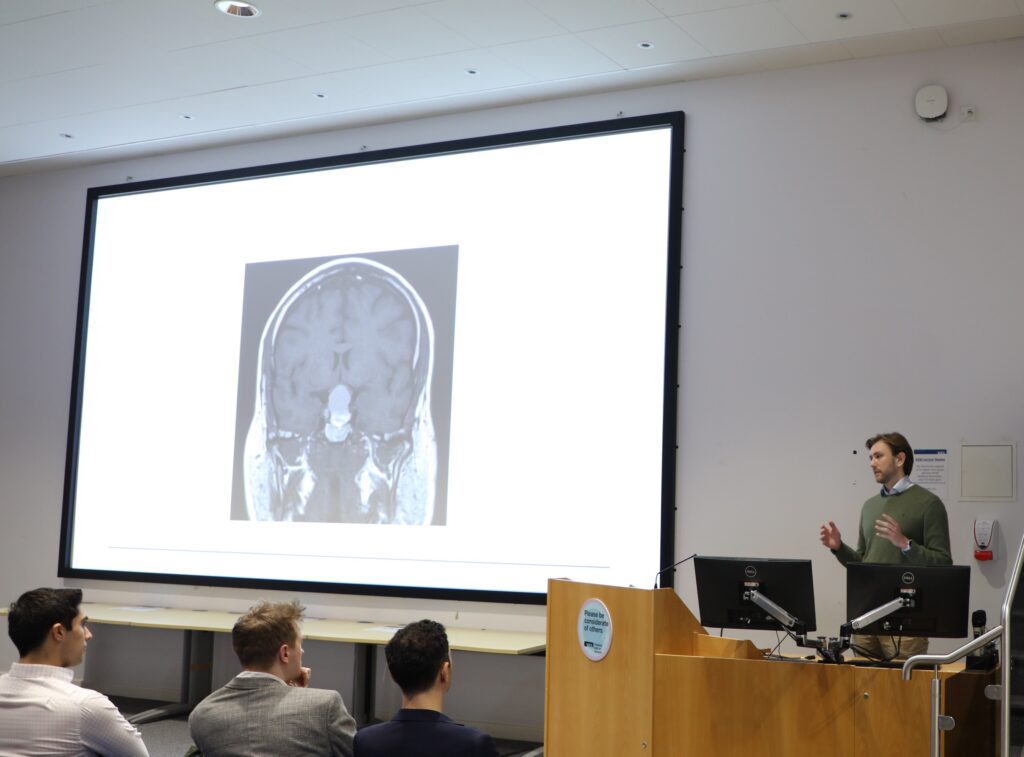
Simon Watt, Public Engagement Officer at the UCL Hawkes Institute, welcomed us and the morning presentations started with an update on efforts to ‘make Pituitary Surgery safer’ – probably the one topic that was of most interest to every listener in the room.
In this case our speaker, George Hudson, explained how scientists were using Artificial Intelligence to build recognition software. This software tool would support the Pituitary surgeon in navigating a clear route through what is a very narrow corridor to the affected area of the pituitary gland, where recognising the anatomy is challenging at best.
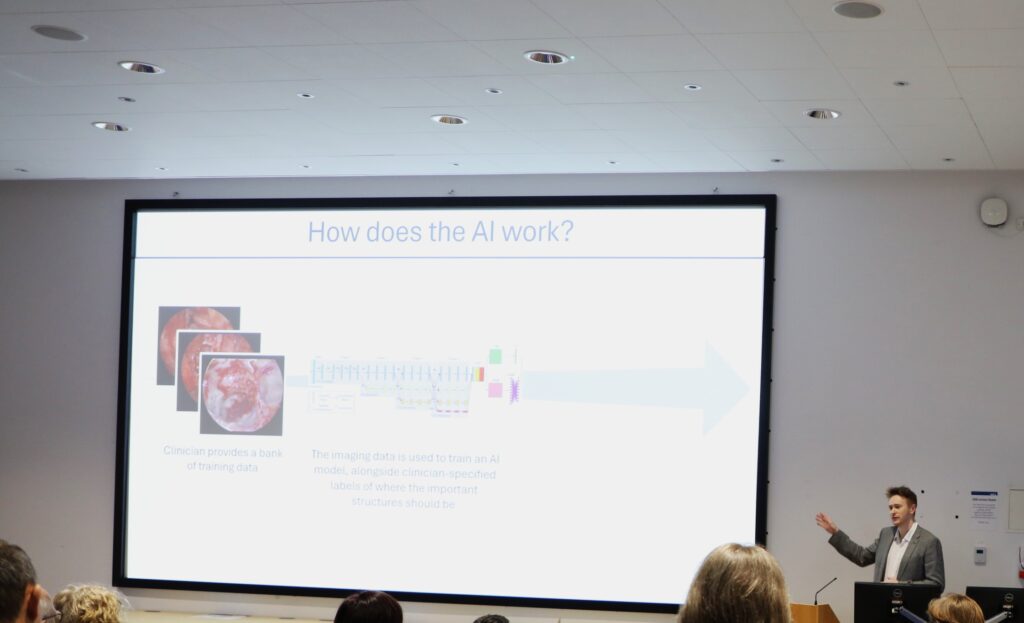
Imagine a screen in the operating theatre, feeding back images and overlaid annotations from the endoscope, all in real time. Surgeons would continue to be ‘in the driving seat’ but could make decisions with more certainty using the information generated by Computer Vision AI. This in turn would improve patient outcomes. I found myself imagining this was like being in the laboratories that came up with the first air traffic control systems or listening to the inventors of car satnav. Both exciting and terrifying!
I think we can all agree that transphenoidal surgery needs an update. I was however reassured to hear that this research unfolds cautiously. Early simulation studies are encouraging and as someone who continues to live with a ‘mixed bag’ of surgical outcomes myself, I’m heartened to think that future pituitary patients may have a simpler and more efficient route back to optimum health.
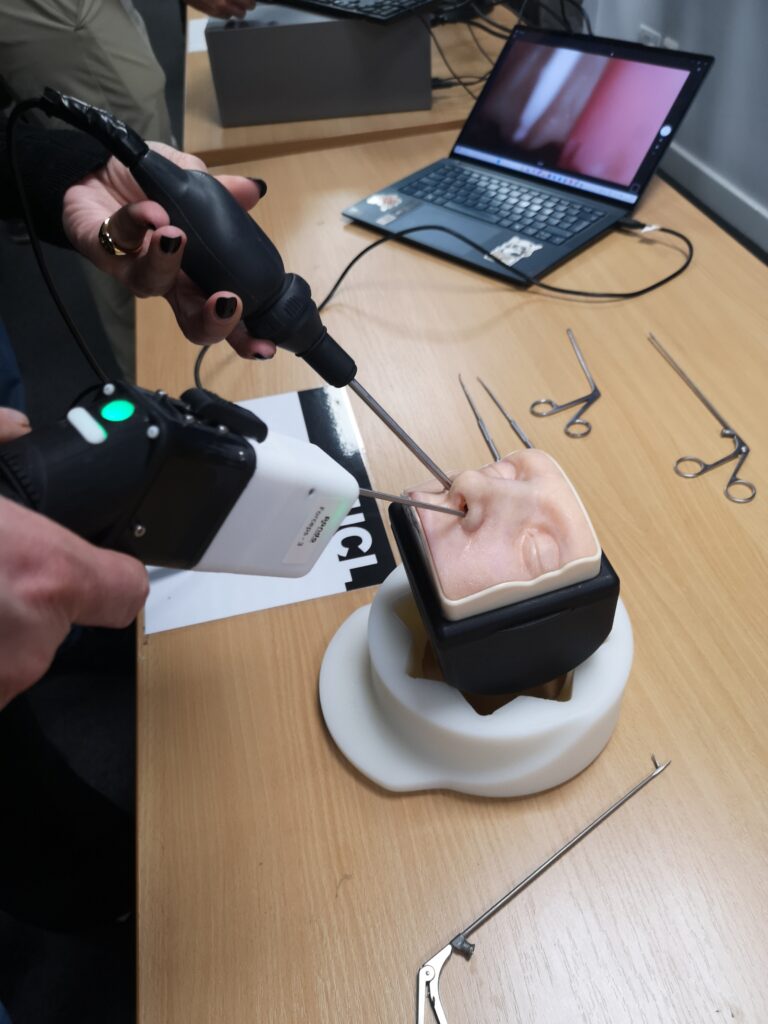
The second presentation concerned another promising upgrade to Pituitary Surgery. Joachim Starup Hansen took us through the development of a robotic hand-held device which, if successful, could augment the surgical tools currently in use. The proposed design is light, ergonomic, easy–to -use and comes with various interchangeable heads. This allows for increased dexterity (getting round corners, swivelling etc) and, most importantly, keeps the operation minimally invasive. What’s not to like?
Again – progress is steady and modest. So far testing has shown the new robotic device to be safe, feasible and useful. On that hopeful note, we enjoyed an extended tea break where we could even see these new tools in action.
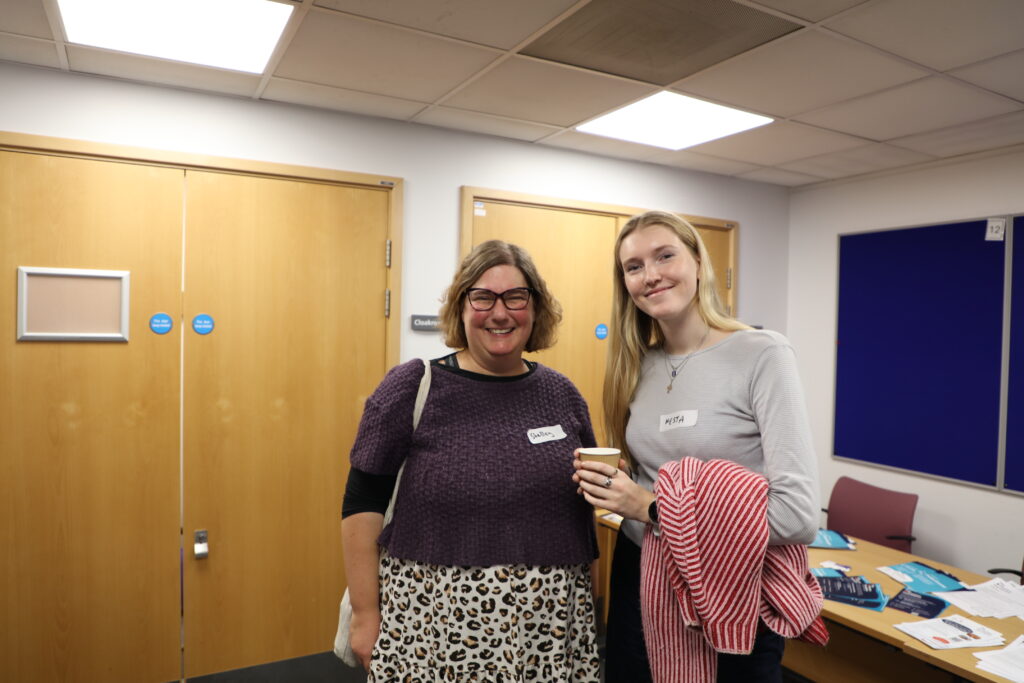
It was also a chance to meet other members of the wider pituitary community. I was really struck by one ladies’ story. She had been treated for craniopharyngioma as a child during the 80’s. This was the era of entering the pituitary through the front of the skull. As she was talking me through her experience, I noticed the visible scar on her forehead and she gaily pointed to the little ‘dent’ on her hairline that is a daily reminder of the days before the transsphenoidal method became standard. With the new gizmos causing much excitement on the table behind me there we were, one foot in the past and one in the present, witnessing the next evolution on the pituitary continuum.
After hot drinks and biscuits, we returned to the lecture theatre for an overview of endocrinology with Giulia Argentesi. I have attended several events such as these and I do find it really useful as a Cushing’s patient to stop, step back and take in the bigger pituitary picture. It’s easy to get bogged down in my own treatment and my own condition. This can heighten the already present feelings of isolation and disconnection. To understand some of the commonalities with different pituitary conditions is interesting and can even be strangely soothing. I was touched by Giulia’s comment ‘I like being an endocrinologist because I stay with my patients over many different phases. It’s a chronic disease and this is a long-term partnership throughout yours and my life.’
We are a community and we are not alone.
We then moved on to a Q&A with the whole panel. It’s always a dynamic atmosphere when topics range from how to get the most from your annual specialist check-ups to the latest drug trials happening around the world.
A great morning all round – everyone learned something new and there was general consensus that gathering like this can only lead to advancements in pituitary health.
Til next time!