





My name is Maria. This is my story, told as clearly and honestly as I can.
I still don’t know exactly when my pituitary gland began to fail. Looking back, it seems to have unfolded somewhere between surviving an abusive relationship, the traumatic and poorly managed birth of my child and a minor car accident.
I was already living with hypermobile Ehlers–Danlos syndrome. Before everything unravelled, my EDS was significant but manageable. I had undergone multiple surgeries to stabilise unstable joints, and I had worked incredibly hard to strengthen my body and lose excess weight. I was fit, active, and raising my son alone. Despite the challenges, I felt strong.
A year later, things began to shift. After the car accident, I developed severe back pain that resulted in a three-day hospital admission. No one could identify a cause. I was referred to a pain clinic, but the waiting times in my area were long.
It wasn’t until another year after that imaging of my spine and neck was finally carried out. My brain appeared on the scan as well. I was told it looked “normal.” What stayed with me, though, wasn’t reassurance — it was being described as “catastrophic” in personality.
I was sent from one neurologist to another, searching for an explanation for the escalating pain and neurological symptoms. Instead of answers, I was told I was dependent on opiates and needed to taper off them. My hypermobility was blamed. Meanwhile, I was gaining weight rapidly and losing mobility. My body felt as though it was shutting down, piece by piece.
The following year, my menstrual cycles stopped completely. I was only in my late 20s. I knew that wasn’t right. My GP referred me to gynecology, but the waiting list was two years. During that time, the pain team continued to insist that my trauma history was the root of my problems.
At one point, they attempted to push my local mental health team to diagnose me with Munchausen’s syndrome. The mental health professionals strongly disagreed. They said I was medically traumatized and living with complex PTSD — not fabricating illness.
By then, I had started blacking out. At first it was occasional. Then it became frequent. Each episode lasted longer than the last.
I was raising my autistic child with very limited support outside immediate family. He witnessed far more than any child should.
No one seemed to consider what it would do to him to see his mother unconscious for hours, unresponsive. He was terrified. He even asked his grandmother to buy extra-strong smelling salts to try to wake me. They didn’t work.
When I was conscious enough to concentrate, I requested my medical records and began researching. I knew something physical was being missed. I couldn’t continue like that — either my body would give out, or my son would eventually be removed from my care because I was too unwell to function.
The previous MRI had been technically “normal.” Up to 40% of the population can have an empty sella and remain asymptomatic. An incidental finding. Mine was described as “partial empty sella.” I also had a small Chiari malformation.
But as I read more, I kept coming back to one possibility: Addison’s disease. The pieces fit too well. The blackouts, the weakness, the deterioration.
When I looked carefully at the imaging reports, I learned that an empty sella means the sella turcica — the bony structure that houses the pituitary gland — becomes filled with cerebrospinal fluid, flattening the gland itself. If the pituitary is compressed, hormone production can fail, but this happens to very few.
Within the next two years, I was blacking out daily — sometimes multiple times a day, for hours at a time. My son, then eight years old, would try desperately to wake me, even pulling at my hair. I had armed myself with as much knowledge as I could gather. Finally, my long-awaited gynecology appointment came through.
That appointment changed everything.
For the first time, I was met with kindness. The gynaecologist listened carefully. Her initial investigations didn’t reveal a clear cause from her specialty alone, but I shared what I had learned about the empty sella and my concerns about adrenal failure. She consulted her senior colleague — who, by extraordinary luck, was a gynaecological endocrinologist. I was transferred into her care.
Those two women saved my life. The gynaecological endocrinologist had a House moment and ran blood panels. Tests no doctor had thought to do before.
Blood tests showed my cortisol levels were undetectable. The blackouts I had endured for four years — episodes I had been accused of exaggerating or seeking attention over — were adrenal crises. I had been living on the edge of fatal collapse. I was extremely fortunate to have survived.
I then began hydrocortisone replacement. The change was profound. Even the relentless back pain that had dominated my life began to ease.
With further imaging and a short Synacthen test, I was formally diagnosed with secondary adrenal insufficiency and early-onset ovarian failure due to empty sella syndrome. One of but undoubtedly very few in the country. Since then, I have also lost growth hormone production, and my thyroid function hangs on by the thinnest margin.
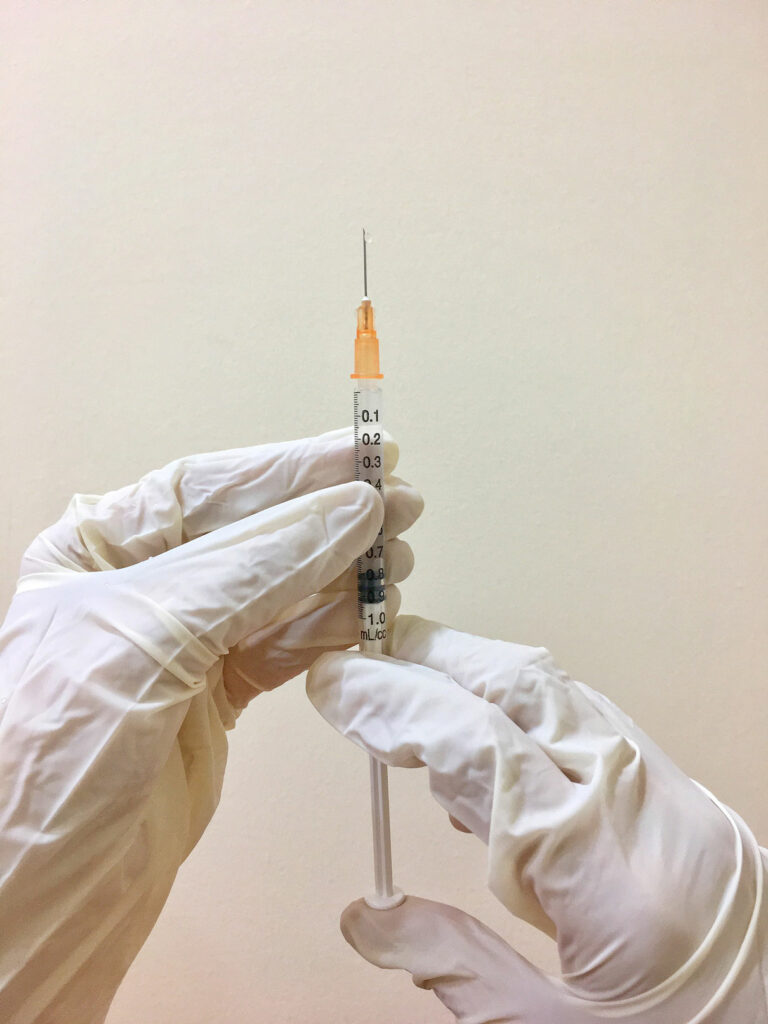
Today, I rely on hormone replacement therapy — cortisol, estrogen, and growth hormone — to survive. My life depends on medications my body can no longer produce.
What remains difficult is that the language used about me years ago still sits in my medical records. Descriptions labelling me as catastrophic continue to influence how new clinicians perceive me. Even after proving, repeatedly, that my symptoms were real and life-threatening, I still face scepticism.
But I am here.
I am alive.
And I am here to watch my son grow into the young man he is becoming. After everything, that is what matters most.
If you are struggling to feel heard while seeking a diagnosis, we are here to help. Our support services are here to listen and help you, so you never feel alone living with a pituitary condition. Get in touch today to see how we can help you.