



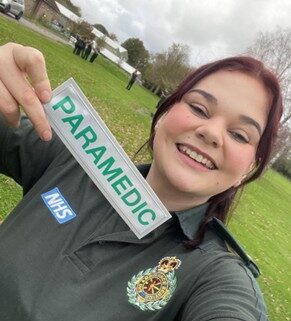
Hi, I’m 25 years old and have congenital pan-hypopituitarism. I recently went to a pituitary support group meeting in Guildford and was encouraged to write my story, so here it is!
Early life and diagnosis
I was born on 21 December 2000 and was admitted to the local hospital on 27 December after a couple of days of not feeding, instantly vomiting milk back up, feeling cold to the touch, becoming increasingly unresponsive, and not waking for a feed or change. On admission, I was unresponsive, hypoglycaemic and hypothermic with a core temperature of 31.6 C.
During the first 24 hours in the NICU, I was slowly warmed up and had an NG tube inserted for feeding. I was treated for infection as my brother, who was 21 months at the time, went to toddler groups and soft play. Over the following week, I started to improve and was still being fed via a tube however, I then started to slip back into being unresponsive and vomiting up all my milk.
Almost four weeks after admission, a doctor who had come back from a rotation with an endocrine specialist in London thought she may know what it potentially could be. After a few scans and tests, I was diagnosed with panhypopituitarism. I had a period of rapid weight loss which was diagnosed as transient diabetes insipidus. Fortunately, this resolved over the course of a couple of weeks, however weight gain was very slow, and I was not growing, which was expected.
At 6 months old, and after an admission to hospital for more tests and blood tests it was discovered that I had hypothyroidism. I was put on thyroxine, and a new regimen of medication started.
A week before my 1st birthday I had my first emergency admission for adrenal crisis, due to a sickness bug. I was unable to keep my medications down and became unresponsive. I had open access to the local hospital and was admitted for 4 days for IV fluids and hydrocortisone. I was discharged just before my 1st birthday.
At nine months old, I was referred to Addenbrookes hospital in Cambridge and closely monitored for weight and growth. I had tests arranged for growth hormone and discovered at 14 months old that no growth hormone was being produced so arrangements were made to be put on growth hormone injections which I started at 16 months.
The struggles of a rare health condition through childhood
During my childhood, I had many admissions for illnesses, but sickness bugs were the worst. My school life was fairly disrupted due to the amount of time I spent in hospital or from hospital appointments for bloods, tests and routine appointments with my consultants.
When it came to birthday parties with friends at school, it became difficult as many parents were not comfortable with the responsibility of having a child with such a medical condition, so I always had to have a parent to go with me. If I wanted to go on residential trips during primary school, it took a lot of planning and was only possible if mum went.
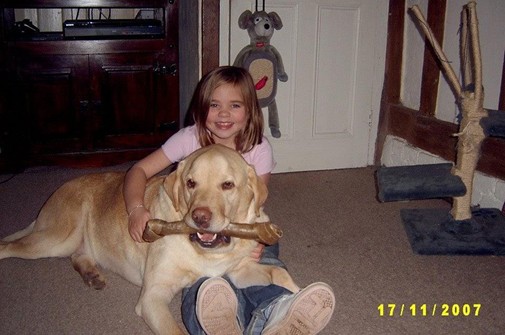
I started high school in 2012, prior to me starting I had meetings with the medical team to make them aware of my condition, and plans were put in place regarding my medication. I was not allowed to carry my medication in my bag with me at school throughout the day, so I carried a medication pack with me whilst on the bus. I had to hand my medication into the office every morning and pick it up before leaving. Additionally, I would go to the school office every breaktime and lunchtime to take my dose of medication.
“I had to hand my medication into the office every morning and pick it up before leaving. Additionally, I would go to the school office every breaktime and lunchtime to take my dose of medication.”
Being at high school was challenging as the days were longer and I had to keep up with more work. I was also attending two ballet classes a week after school so it was important that I kept in a routine and rested when I could.
My cancer diagnosis
In November 2013, I had a routine GP appointment as I was experiencing some pain, which I thought was just an ongoing muscle strain. I had also noticed that the right side of my abdomen felt different to the left and raised this. The GP referred me to the hospital, and I had an appointment soon after.
After multiple scans and tests at West Suffolk Hospital, I was referred to Addenbrookes and attended an appointment. I was told that I had a tumour on the right side of my abdomen which was caused by ovarian cancer. They had picked up an abnormality in my bloods, and this had indicated what kind of cancer it was.
This abnormality was a cancer marker; the normal levels are between 1 – 10 and mine was measuring 4835.
I had been booked in for surgery on 17 December to have the tumour removed and would most likely need a small round of chemotherapy after this. I was advised until my surgery not to go to school or carry on with ballet.
After my surgery, I was told that the whole tumour had been removed and due to the cancer part being in the centre, I did not need any chemotherapy. Over the next few days I was monitored, had regular bloods and slowly started to get up and move around with the help of the physios.
My dad and brother came to visit, and I was very well looked after by the nurses. I had not recovered enough to be discharged for my birthday, so I celebrated my 13th birthday in the hospital. I was discharged on 22nd and was able to spend Christmas at home with my family and pets.
My recovery from surgery was slow and I was not allowed to do any physical activity for a few months whilst I regained my strength. I returned to school in stages and gradually built it up and tried to keep up with as much work as I could.
I had to take a term out of ballet, but I still attended every class to watch and was determined to take my exam in July. I returned to ballet around Easter and started to build up my strength. I was able to take my ballet exam in the summer and passed it.
“I had to take a term out of ballet, but I still attended every class to watch and was determined to take my exam in July. I returned to ballet around Easter and started to build up my strength. I was able to take my ballet exam in the summer and passed it.”
In 2016, after regular blood tests and scans I was discharged from oncology! I had the all clear and the doctors were happy with how I was, so I was officially discharged.
Starting to struggle with migraines
I started to experience severe migraines soon after my surgery. These migraines could last all day, and I would often sleep throughout the day without eating, drinking or taking my medications.
The migraines became very frequent and would last at least 12-24 hours every week. It was very disruptive to my school life, but I tried my best to keep up with all the work. I was referred to a neurology team at Great Ormond Street Hospital in London to investigate and treat my migraines.
“The migraines became very frequent and would last at least 12-24 hours every week. It was very disruptive to my school life, but I tried my best to keep up with all the work.”
I was prescribed multiple different medications to help treat them but none of them were effective. I was given the option to have a nerve injection in the back of my head which could help relieve the pain. I gave this a try, but it did not help at all. After more medications and pain relief, the migraines continued and I was admitted to the hospital for a DHE infusion.
This involved a PIC line being inserted and a drug being infused into me every 8 hours, with an increase in dosage each time. This intervention was supposed to help reduce the migraines and help control the pain. This treatment took the migraines away for approx. 3 weeks and then they returned and were coming back in the same pattern and intensity.
The only way I was able to get these migraines to stop was to come off one of my medications. I had a feeling that the oestrogen medication I was on was causing the migraines. I made the decision to stop taking my oestrogen and my migraines stopped within a few weeks.
I decided that I wanted to get through sixth form and get my A-levels so I would have a chance of going to university. I wanted to start to live my life without the pain and disruption of migraines every week.
Applying for university
I went to sixth form and resat year 12 as I was still experiencing migraines throughout the first time I was in year 12. I was much happier once I was migraine-free and able to focus on my studying and schoolwork a lot more.
I started to look at going to universities and wanted to go to some open days. I attended an open day and had a look at the paramedic degree; I wanted to ask if it was possible for someone with my condition to be able to go into this career.
I was told that I would be able to do the degree, but it would not be possible for me to have a career as a paramedic with my condition. After this open day, I completely disregarded going into this career, even though it was really what I wanted to do. I started considering other careers and carried on with my A-levels.
Unfortunately, when I moved into year 13, we entered lock down due to covid and I did not take my A-Level exams. I decided throughout lock down that I was not ready to go to University, I needed a year to rest and take the time to decide what I wanted to do. I already had a part-time job, so was able to increase my hours and save lots of money.
I started to think about what I would like to do and started to think about what courses I could do. I knew deep down I still really wanted to be a paramedic and just thought I would go for it.
“I started to think about what I would like to do and started to think about what courses I could do. I knew deep down I still really wanted to be a paramedic and just thought I would go for it.”
I wrote my personal statement and applied to universities. I got accepted and invited for interviews. After interviewing I got offered a place at the University of Surrey and accepted it!
Starting at the University of Surrey
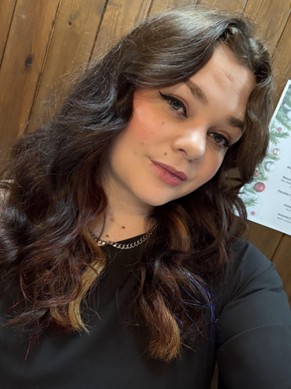
In September 2021, I started university to study Paramedic Science. I moved into university accommodation in Guildford. This was the first time living away from home by myself. It was nerve wracking at first, but I quickly settled in and made some good friends.
First year of university taught me how to be organised and live by myself, I made sure to keep on top of my medications and embrace the university life by socialising and studying hard. I was anxious about going on placement for the first time as I wasn’t sure how I would be able to manage the long hours and unpredictable work environment.
My mentor only did night shifts, so I quickly adapted to the shift night life! I learnt how to change my medication times to fit in with my shifts and get plenty of rest in between. Additionally, I had to do alternative placements such as care home shifts and working in a hospital on one of the wards.
“I learnt how to change my medication times to fit in with my shifts and get plenty of rest in between.”
Again, these were long days, but I kept up and made sure to keep organised throughout. At the end of first year, I had passed placement and all my essays and was excited to move into second year.
In my second year I moved into a student house with my friends, and my course became more demanding. I learnt important paramedic skills in lectures and got to put them into practice on placement and on hospital shifts.
My placement was in a different area, so I travelled further to shifts and I was expected to know and learn more. I had a new mentor, who was encouraging me to take more responsibility on shift and helping me learn more aspects of the job. I enjoyed second year as I could start putting skills into practice such as cannulation and increase my confidence when caring for patients.
Between second and third year I had the opportunity to apply for a part-time job through the ambulance service and work as an emergency care support worker (ECSW) alongside my university course.
I had to obtain a C1 driving license which involved doing another driving theory test and driving lessons in a C1 class vehicle. I needed to get this license so that I could drive the ambulance trucks. Once I passed the driving test for my C1, I could move onto the 4-week training course to drive on blue lights and sirens. This involved a further three theory tests and another driving test.
Each week in this course, I learnt about emergency driving and how to drive correctly on blue lights and sirens. This course was very intense and hard work, but by the end of it, I had passed all tests and was excited to go out on the road driving on blue lights and sirens!
After finishing my blue light training, I went straight into my four-week elective placement. I decided to split these four weeks in half and do two weeks in the control centre and 2 weeks in operating theatres. The two weeks in the control centre were interesting as I got to experience how 999 calls came in and were answered. This gave me valuable insight into how these calls come through into the ambulance and why we are dispatched to them.
The other two weeks I spent watching surgery in operating theatres to observe how conditions and illnesses look on the inside of the body. When this elective placement finished, I started third year and was based out of Gatwick.
Third year was a very challenging year; I had to write my dissertation and apply for a paramedic job and my registration. My placement was further away, so days on placement were longer but it was worth it for the end goal. I would work two shifts a week as a student and two shifts as an ECSW. I tried my best to balance university, working and taking care of myself.
During this year, I was encouraged to make most of the decisions regarding patient care and would run jobs on shift with little assistance. I enjoyed being in 3rd year as I knew I was closer to becoming a qualified paramedic. However, I was also nervous as I would question if I was ready to be qualified.
I finished my placement for third year mid-August 2024 and received my paramedic registration in October! I was very thankful to all my friends, family and work colleagues that helped me through and I was very excited to start my career.
Life as a qualified paramedic
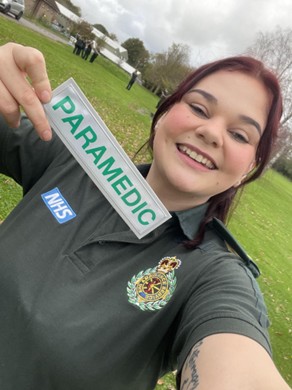
In October 2024, I started my full-time job working as a newly-qualified paramedic (NQP) for South East Coast Ambulance Service! I work a mix of shift patterns which includes 10- and 12-hour shifts split into days, twilights and nights.
I love working as a paramedic as every shift is different and it gives me the opportunity to challenge myself. I get to meet a variety of people and help them through difficult times in their lives and provide care and support. Due to the unpredictable nature of the job, I sometimes must act fast and make decisions quickly in a time critical setting. The job can be difficult at times and can take a physical and emotional toll. The different sleep patterns and long hours can be very demanding, but I tailor my medication times to fit in with my shift patterns.
Throughout my time as a student, I would make my mentors and other paramedics I worked with aware of my condition. This was important so if anything were to happen on shift, they would be aware of what to do. In my current role as an NQP, I spread awareness of my condition when working with other colleagues, if I’m not with my permanent crewmate.
I’m very grateful to be working for the service and I have definitely met some very supportive people who I enjoy working with. I have now been qualified for over a year and am still loving my job. I have grown in confidence and am very proud to be part of the green family.
Everyday life
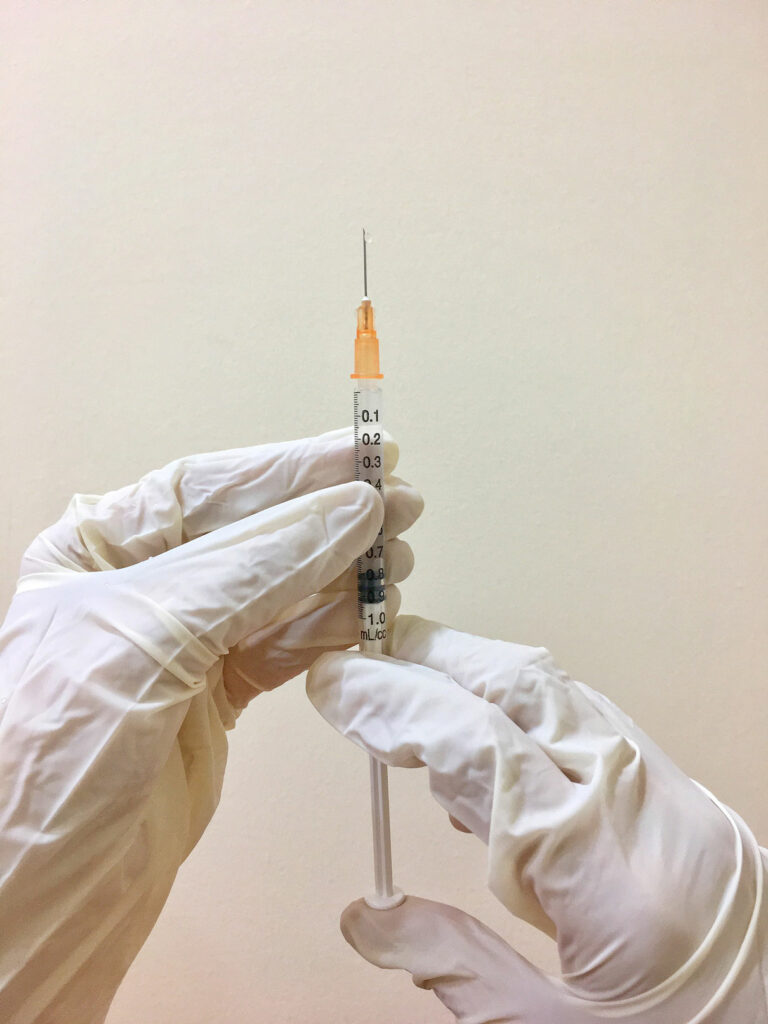
Day-to-day, I am still taking multiple medications. I take hydrocortisone four times a day, thyroxine, paroxetine, tibolone, cholecalciferol and adcal d-3. Additionally, I am on a very low dose of an oestrogen patch which I change twice a week and do a growth hormone injection every night. The main concern from my consultant now is my bones, due to having osteopenia. When I’m not at work, I go to the gym as this is important to help strengthen my bones and keep me fit for work, but it also helps with my mental health. I try to go to the gym on my rest days between work as this is when I can get the most out of my sessions.
My main symptom day-to-day is fatigue and low energy levels, which is something I have always struggled with. I have days where the tiredness hits me hard and I can spend the whole day in bed sleeping. This can sometimes be a knock-on effect from being very busy or having very intense shifts but, I let myself have these days as it’s important to let myself rest.
Goals for the future
My goals for the future include continuing to work for the ambulance service and provide help, care and support for members of the public. I will continue to spread awareness for my condition and additionally, similar pituitary conditions.
Whilst I’m still young enough, I want to explore other countries, starting with Europe as this is easier for managing my condition due to time differences and insurance. I would then like to expand out further and explore other parts of the world. Furthermore, I would like to buy a house and have some company in the form of cats and dogs and then further down the line I would like to attempt to have children. This will be a difficult journey due to needing medical intervention and more medication. It will be a big decision to make, and I would have to face the possibility of my migraines returning due to needing to be on a high dosage of oestrogen and extra hormone medication.
At the moment, I have a good stable job, supportive friends, family and work colleagues who I am grateful for, and I try my best to manage my condition as best as I can day to day.