



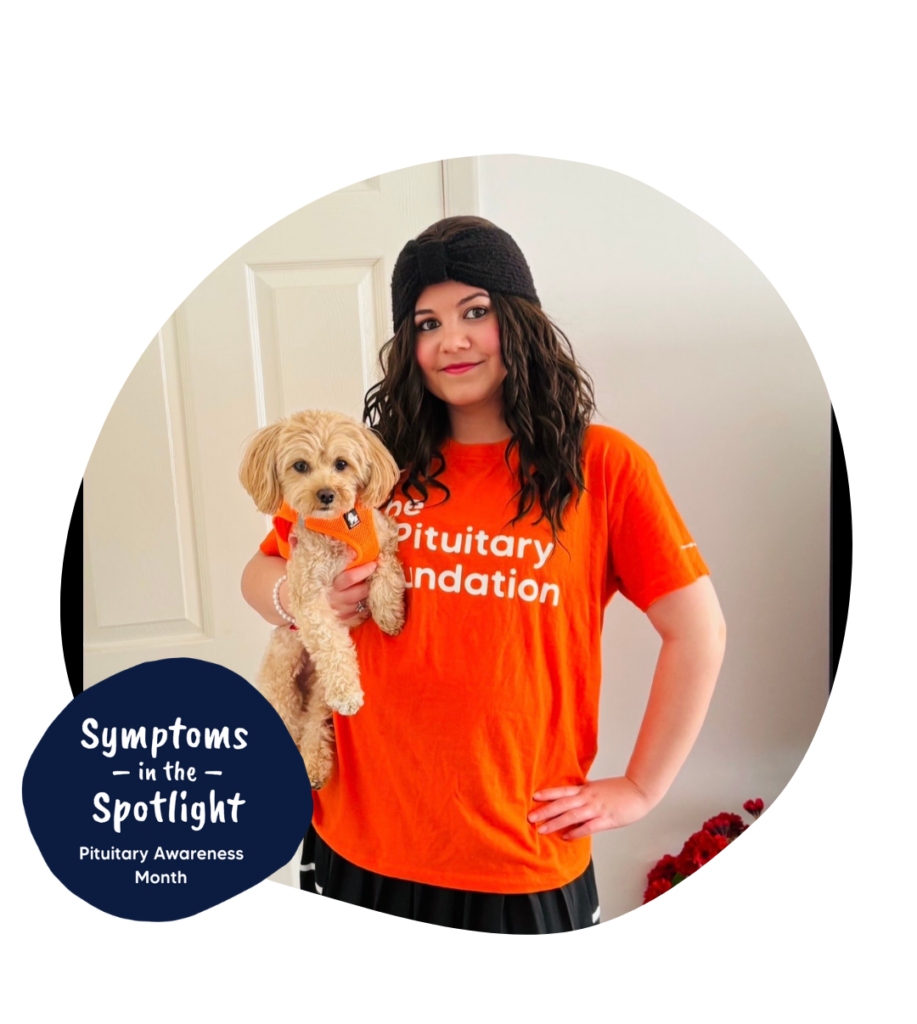
For our Pituitary Awareness Month 2026 campaign, ‘Symptoms in the Spotlight’, Yasmin shares her story. You can find out more about our campaign and read more of our community’s stories on our website here.
Before my Cushing’s diagnosis, I considered myself a healthy and fit 38-year-old. I worked full-time with primary-aged children, was independent and rarely needed to visit my GP. I never imagined that a tiny tumour on my pituitary gland could eventually change almost every part of my life.
My journey with Cushing’s disease began with symptoms that, individually, did not seem particularly alarming. I experienced headaches from time to time, gradual weight gain and hair loss. I put the hair loss down to stress and the weight gain happened gradually enough that I didn’t associate it with an illness.
Then my periods stopped. One month became two, then several months passed without a period. Looking back, this was one of the clearest signs that something wasn’t right, but at the time I didn’t understand what it meant.
My health then deteriorated frighteningly quickly.
I developed severe muscle weakness. Stairs and hills became increasingly difficult, despite previously being active and independent. I began collapsing at work and eventually collapsed at home after reaching the top of the stairs. My mum found me barely responsive and unable to get myself up and called 999. I will always be incredibly grateful that she did, because I genuinely believe that call saved my life.
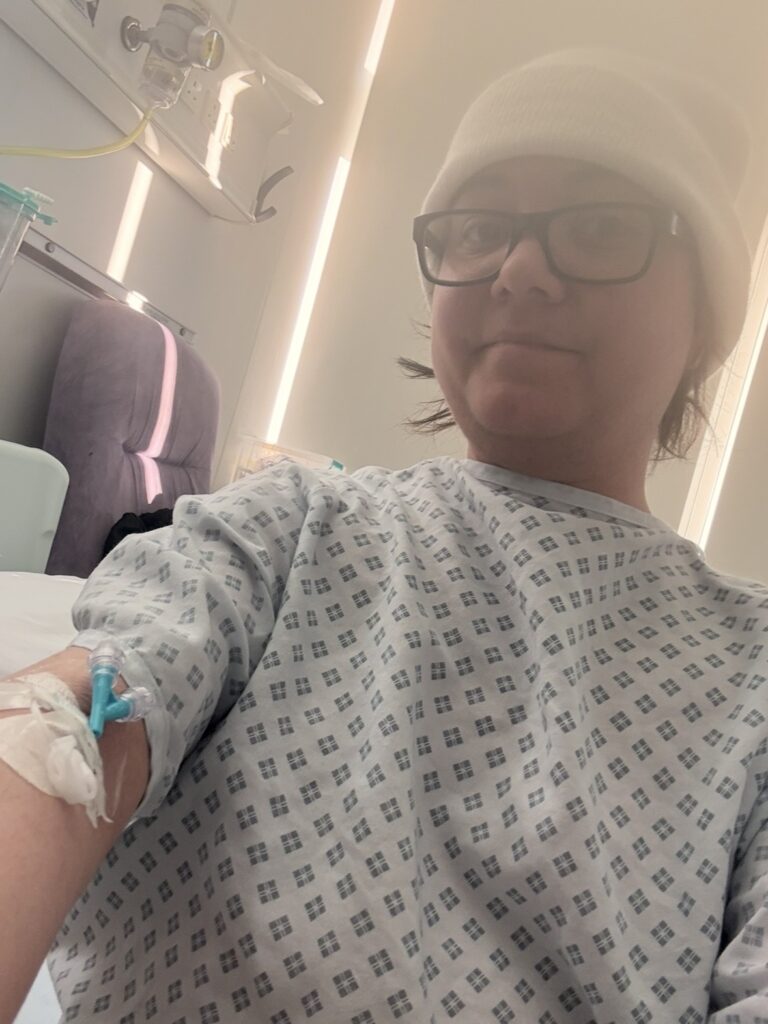
When the paramedics arrived, they discovered that my blood glucose and blood pressure were extremely high, and I was taken straight to hospital. I genuinely believed I might be home the following day. Instead, I remained in hospital for 24 days.
“When the paramedics arrived, they discovered that my blood glucose and blood pressure were extremely high, and I was taken straight to hospital. I genuinely believed I might be home the following day. Instead, I remained in hospital for 24 days.”
January 2025 became the month that changed my life.
At my worst, my muscle weakness was so severe that I needed a walking stick and eventually a wheelchair. I became dependent on other people for things I had previously taken completely for granted.
My body had changed dramatically. I had gained weight, experienced significant hair loss and noticed changes in my overall appearance. I also developed other physical symptoms, including high blood pressure and diabetes.
But the physical changes were only part of the story.
I experienced severe brain fog, memory problems and changes in my mental state. At times I didn’t feel like myself at all. My cognition had become so affected that hospital staff sometimes had to ask my mum questions about how I had been before becoming ill.
Eventually, after numerous blood tests, investigations and MRI scans, an endocrinologist came to my bedside towards the end of January 2025 and told me that I had Cushing’s disease caused by a pituitary tumour.
I had never even heard of Cushing’s disease.
Suddenly I was trying to understand cortisol, ACTH and the pituitary gland while processing the fact that a tiny tumour at the base of my brain could cause such enormous changes throughout my body.
I underwent transsphenoidal pituitary surgery in March 2025, and the tumour was removed.
The emotional impact of appearance changes:
One of the things I found particularly difficult about Cushing’s was seeing my body and appearance change so dramatically.
Weight gain, hair loss and other changes to my appearance including facial hair happened alongside everything else I was experiencing physically. When you don’t recognise your own reflection, it can affect how you see yourself as a person.
Before becoming ill, I was independent, working full-time and living my normal life. Suddenly, I was seriously unwell, using a wheelchair and looking very different from the person I remembered being.
“Before becoming ill, I was independent, working full-time and living my normal life. Suddenly, I was seriously unwell, using a wheelchair and looking very different from the person I remembered being.”
There was an emotional side to this that I don’t think is always easy for other people to understand.
When people see someone who has gained weight or looks different, they may make assumptions about lifestyle or simply see the outward appearance without understanding what is happening underneath. For me, the changes weren’t something I had chosen. They were symptoms of a serious endocrine disease.
It could also be difficult emotionally when photographs reminded me of how different I looked and how much my life had changed. There were times when I struggled with my confidence and felt frustrated that my body didn’t look or feel like my own.
I’ve learned that recovery isn’t just about blood tests, scans or whether a tumour has been removed. It is also about rebuilding your relationship with yourself again.
Learning to manage life after Cushing’s disease:
Surgery was a huge turning point, but recovery did not mean instantly returning to the person I was before Cushing’s.
I now live with secondary adrenal insufficiency and need hydrocortisone replacement because my body cannot currently produce enough cortisol adequately. I have also been diagnosed with growth hormone deficiency and am preparing to begin daily growth hormone replacement.
Managing these conditions means being aware of my body’s limits and learning to listen to it.
Fatigue and weakness can still affect me, and I have had to accept that recovery takes time. I have learned not to compare my recovery with anyone else’s and not to expect my body to heal according to a particular timetable.
For me, one of the most important things has been pacing myself. I have had to learn that doing less on one day isn’t failing. Rest is part of recovery.
“For me, one of the most important things has been pacing myself. I have had to learn that doing less on one day isn’t failing. Rest is part of recovery.”
My mum as well as my best friend and brother have all been an enormous source of support. They were all there when I became seriously ill, during my hospital stay and throughout my recovery. Having someone who understands what happened and knows what I was like before I became ill has been incredibly important.
My endocrinology team and healthcare professionals have also played a huge role in helping me understand what has happened to my body and how to manage life after pituitary surgery.
The Pituitary Foundation has been another important source of support. Knowing that there is a community of people who understand the challenges of pituitary conditions can make an enormous difference, particularly when you are living with a rare condition that many people have never heard of.
What has helped me most?
I have found that several things have helped me manage the emotional and physical effects of Cushing’s:
● Learning as much as I can about my condition and understanding why my body has changed.
● Listening to my body rather than pushing myself beyond my limits.
● Allowing myself to rest without feeling guilty.
● Accepting that recovery takes time.
● Talking openly with people I trust when I am struggling emotionally.
● Keeping in contact with my healthcare team and asking questions when I don’t understand something.
● Celebrating small improvements rather than focusing only on how far I still have to go.
● Reminding myself that my appearance does not define my health, my worth or who I am.
Most importantly, I have learned to be kinder to myself.
My advice to others:
If you are experiencing changes to your appearance alongside other unexplained symptoms, please don’t automatically blame yourself.
Weight gain is not always about diet or lifestyle. Hair loss is not always stress. Changes to your periods, fatigue, muscle weakness, headaches, brain fog and changes in your appearance can sometimes be signs that something else is happening in your body.
My advice is to listen to your body and speak to a healthcare professional if something doesn’t feel right. You know yourself better than anyone.
“My advice is to listen to your body and speak to a healthcare professional if something doesn’t feel right. You know yourself better than anyone.”
And if you are already living with a pituitary condition and struggling with appearance changes, please remember that you are not alone. It is completely understandable to have difficult days. You don’t have to pretend that changes to your body don’t affect you emotionally.
Try to focus on what your body has been through rather than judging it for how it looks. Your body has been fighting to keep you going.
What I wish people knew:
The one thing I wish people understood about appearance changes caused by pituitary conditions is that you cannot always see the illness behind the change.
Someone may look different because of their condition, medication or hormonal changes, but that doesn’t mean they are unhealthy because of their lifestyle, or that they are not trying.
Behind the weight gain, hair loss or other visible changes can be someone who is frightened, exhausted and trying to understand what is happening to their body.
A little understanding and kindness can make a huge difference.
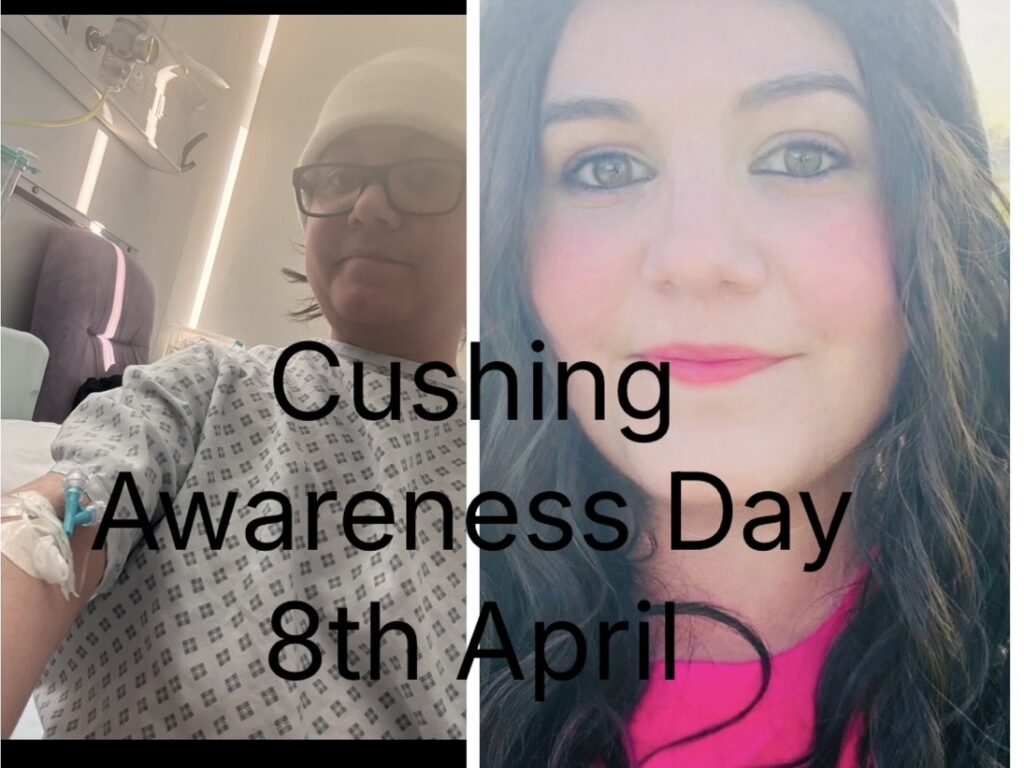
Life after Cushing’s disease:
There is another side to my story, and that is the part I want people who are newly diagnosed to hear.
Life is brighter now.
I can walk again. I am no longer in a wheelchair and I no longer need a walking stick. I have regained independence that, during those darkest weeks in January 2025, I wasn’t sure I would ever have again. I can drive and enjoy parts of my independence that I once thought I had lost.
I still experience fatigue, weakness and the ongoing challenges of living with adrenal insufficiency and growth hormone deficiency, but I have come an incredibly long way.
My experience has taught me that symptoms can be easy to dismiss when they appear individually. A headache can seem like just a headache. Weight gain can be blamed on lifestyle. Hair loss can be blamed on stress. A missed period can have many explanations. Fatigue and brain fog can be put down to being busy.
Sometimes, however, those symptoms are pieces of a much bigger puzzle.
That is why the theme “Symptoms in the Spotlight” means so much to me.
If sharing my experience helps somebody recognise that their symptoms deserve investigating, helps someone struggling with changes to their appearance feel less alone, or gives someone newly diagnosed with Cushing’s disease hope for the future, then sharing my story will have been worthwhile.
My journey has taught me never to take the seemingly small things in life for granted.
Recovery takes time, and everybody’s journey is different. But there really can be life on the other side of Cushing’s.
I am living proof of how much can change.
Have you found this helpful?
If so, please support us to bring useful information to more people affected by pituitary conditions.