





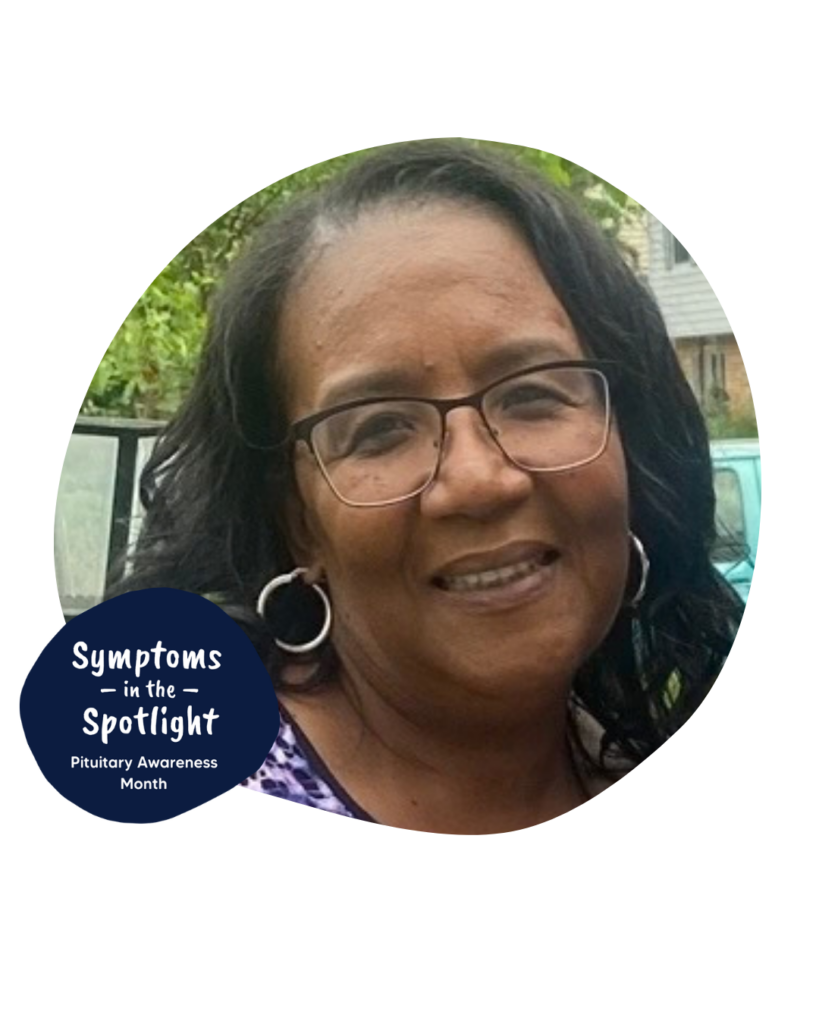
For our Pituitary Awareness Month 2026 campaign, ‘Symptoms in the Spotlight’, Renee shares her story. You can find out more about our campaign and read more of our community’s stories on our website here.
My Cushing’s Disease Journey
My name is Renee Brown and I was diagnosed with a pituitary tumor in 1992. Like many people with Cushing’s disease, my journey has been long, complicated, and filled with both challenges and victories.
My symptoms began with many of the classic signs of Cushing’s disease: rapid weight gain, acne, hair loss, easy bruising, and many of the other symptoms that so many of us know all too well. At the time, I didn’t understand what was happening to my body, but eventually I received my diagnosis.
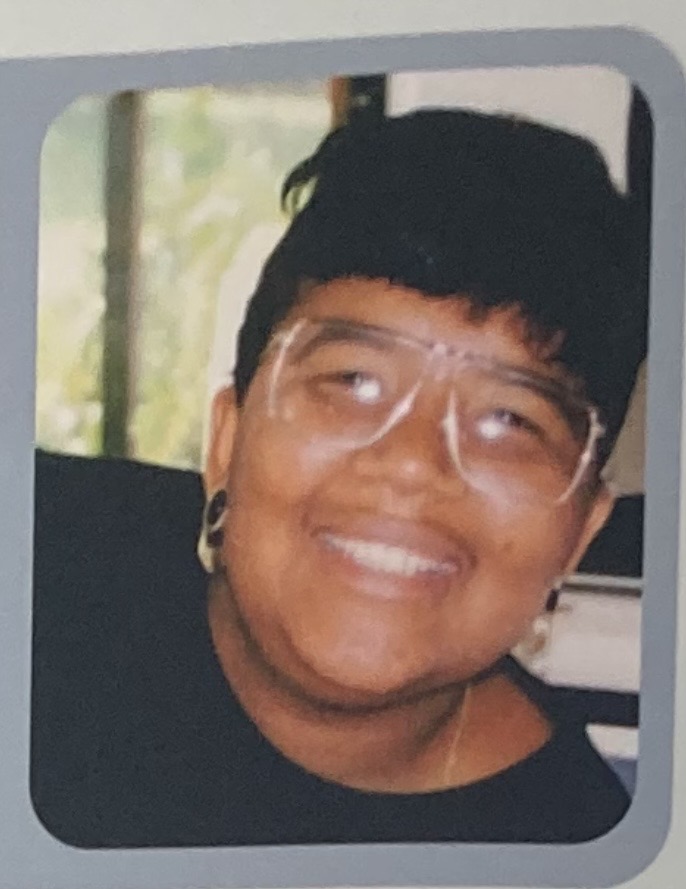
In 1993, I underwent my first transsphenoidal pituitary surgery. When that was unsuccessful, I had a second surgery in 1998. In 1999, I underwent Gamma Knife radiation treatment, and years later, I required Gamma Knife treatment again in 2021.
Unfortunately, my journey didn’t end there. In October 2025, I was diagnosed with a recurrence of Cushing’s disease. Along the way, I have also developed AVP deficiency (previously known as diabetes insipidus), thyroid cancer, and hypertension. Today, I take desmopressin for AVP deficiency, medication for high blood pressure, and weekly growth hormone injections as part of managing my pituitary disease.
Living with Cushing’s disease is about so much more than the physical symptoms. One of my greatest challenges has been dealing with blood pressure that remains difficult to control. I also struggle with mood swings and emotions that sometimes feel beyond my control. Stress affects me deeply, and if I don’t get enough rest, I become even more emotional. These are the invisible parts of this disease that many people don’t see, but they are very real.
“These are the invisible parts of this disease that many people don’t see, but they are very real.”
One of the greatest blessings throughout my journey has been the support of my family. Their love and encouragement have helped me through some of my most difficult days.
Several years ago, I also started a support group in the DMV area because I wanted others living with pituitary disorders to know they were not alone. Eventually, I stepped down and passed leadership to someone else because managing the group became overwhelming for me, but I remain grateful that it continues to support others.
Living with Cushing’s disease has taught me that managing my health is not something I do once in a while—it is something I have to be mindful of every day.
Because of the effects Cushing’s disease has had on my body, I have several things that I have to manage on a daily basis. I take growth hormone injections as prescribed, and I take desmopressin to manage AVP deficiency. I also take medication for hypertension, which has been difficult to control.
My blood pressure is something I pay very close attention to. I am part of a Blood Pressure Clinic, and I monitor my blood pressure at least twice a day. My readings are monitored by the clinic and communicated to my doctor. If my blood pressure is too low or too high, the clinic contacts me so that my medications can be reviewed or adjusted as needed. This gives me reassurance that I am not managing it completely on my own.
I also have to listen to my body and pay attention to how I am feeling. Some days are easier than others. Fatigue, changes in my body, emotional changes, and other effects of Cushing’s can make everyday life challenging. I have learned that I have to give myself permission to slow down and rest when my body tells me that I need to.
“I also have to listen to my body and pay attention to how I am feeling. Some days are easier than others. Fatigue, changes in my body, emotional changes, and other effects of Cushing’s can make everyday life challenging. I have learned that I have to give myself permission to slow down and rest when my body tells me that I need to.”
For me, managing my world with Cushing’s means staying connected with my doctors, taking my medications, monitoring my blood pressure, keeping my appointments, and paying attention to changes in my body. It also means learning to advocate for myself and not being afraid to speak up when something doesn’t feel right.
Cushing’s disease has changed my life, but it has also taught me to be more intentional about taking care of myself. I have learned that managing a chronic illness is not about being strong every minute of every day. Sometimes, managing it means asking for help, resting, being patient with myself, and taking one day at a time.
I am still learning how to live with everything Cushing’s has brought into my life. But I continue to manage it, one day, one medication, one blood pressure reading, and one appointment at a time
If I could offer any advice to someone newly diagnosed, it would be this:
Don’t let this disease define you. Maintain a positive attitude and remind yourself that while Cushing’s disease is part of your life, it does not control who you are. Do everything you can to manage the disease instead of letting it manage you.
Also, find doctors who truly listen to you. A good physician doesn’t have to have every answer, but they should be willing to work with you and, when necessary, connect you with specialists who do. You deserve a healthcare team that believes you, supports you, and is committed to finding the best care possible.
My journey has now spanned more than three decades. There have been setbacks, disappointments, and times when I wondered what would come next. But there has also been hope, faith, resilience, and the support of family, friends, and this incredible pituitary community.
To everyone living with Cushing’s disease or another pituitary disorder: you are stronger than you know. Keep asking questions, keep advocating for yourself, and never lose hope. We may not have chosen this journey, but we do not have to walk it alone.
“Awareness saves lives. Earlier diagnosis can spare patients years of suffering, and sharing our stories helps make that possible.”
Have you found this helpful?
If so, please support us to bring useful information to more people affected by pituitary conditions.