





For our Pituitary Awareness Month 2026 campaign, ‘Symptoms in the Spotlight’, Kaya shares her story. You can find out more about our campaign and read more of our community’s stories on our website here.
Please be aware that this story contains an image of needles (Kaya’s arm where she has an IV inserted).
Last year marked the beginning of a very difficult and unexpected chapter in my life. Something I was not prepared for.
Following a car accident early last year through no fault of my own, I began experiencing severe back pain, debilitating headaches and extreme fatigue. I also started severe bleeding all of the sudden to an extent where I struggled to walk. I became anemic because of that. My health continued to deteriorate. One of the scariest symptoms was losing peripheral vision in my left eye. The corner of my eye just felt pitch black and my visibility became reduced.
My vision problems raised concerns, and I was referred for an urgent appointment. I underwent a number of detailed vision tests. The results confirmed- there was a significant problem with my peripheral vision. The consultant was concerned that there could be something affecting the pathway between my eyes and my brain, so I was sent for an urgent CT scan for my head.
This scan revealed I had a non functioning pituitary tumour which was benign, known as a Macroadenoma. I never imagined that this would lead to the discovery of a type of brain tumour and change my life.The consultant advised the only treatment I could have was a brain surgery. The thought of surgery was scary, and I had so many unanswered questions — Would I recover? Would my vision return? Would the headaches and fatigue ever improve?
“The thought of surgery was scary, and I had so many unanswered questions — Would I recover? Would my vision return? Would the headaches and fatigue ever improve?”
In December last year, I was diagnosed with Cushing’s disease secondary to the tumour. Cushing’s disease occurs when the body produces too much cortisol (stress hormone), this affected my body severely. My cortisol levels were extremely high. The endocrinologist said my appearance changed significantly. My case became more complex and rare. My tumour was then classed as a “Functioning Macroadenoma.” I was being treated for high blood pressure, tachycardia, diabetes, medications to lower my cortisol aswell as taking blood thinners.
I continued to experience muscle weakness, severe fatigue and headaches, and I became obese very quickly and bruised easily. My headaches were constant, painkillers didn’t help, I found it hard to have conversations, noise, chewing food all had an impact on my headaches and concentration which caused brain fog. The disease also made me very irritable with mood swings.
Receiving the diagnosis was overwhelming. My brain was hurting from processing all the medications I had to take (Metyrapone, Lercanidipine, Metformin, Bisoprolol, Spironolactone, Apixaban, Norethisterone, Iron, Vitamin D). My endocrinologist was concerned about how severely Cushing’s disease was affecting me, so I was asked to attend the endocrine clinic every week for close monitoring. My doctors worked hard to get my condition under control and prepare me for surgery.
Eventually, the day I had been preparing for finally arrived. I underwent Transsphenoidal surgery in March. I stayed at the hospital for 4 nights.
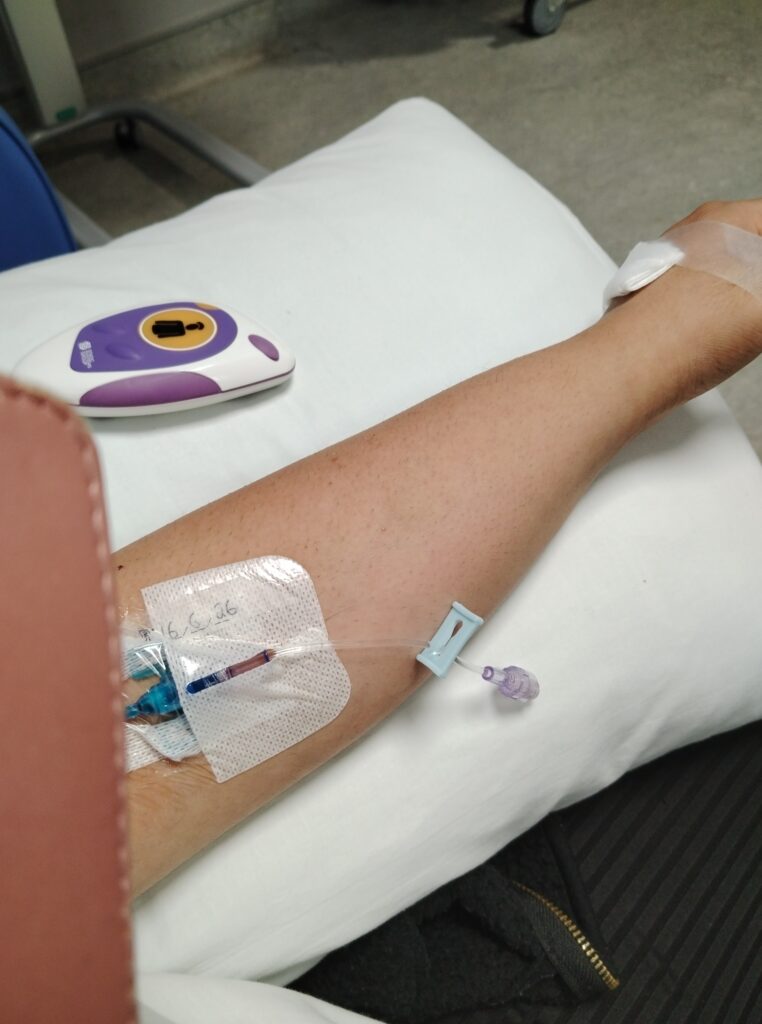
My operation lasted around 5 hours, I remember waking up in the recovery room being told by the surgeons my surgery was successful. I woke up with a throbbing headache, didn’t sleep very well and I felt extremely tired. I lost my balance and I could no longer walk alone, requiring the ward staff to assist me with every movement, including using the toilet.
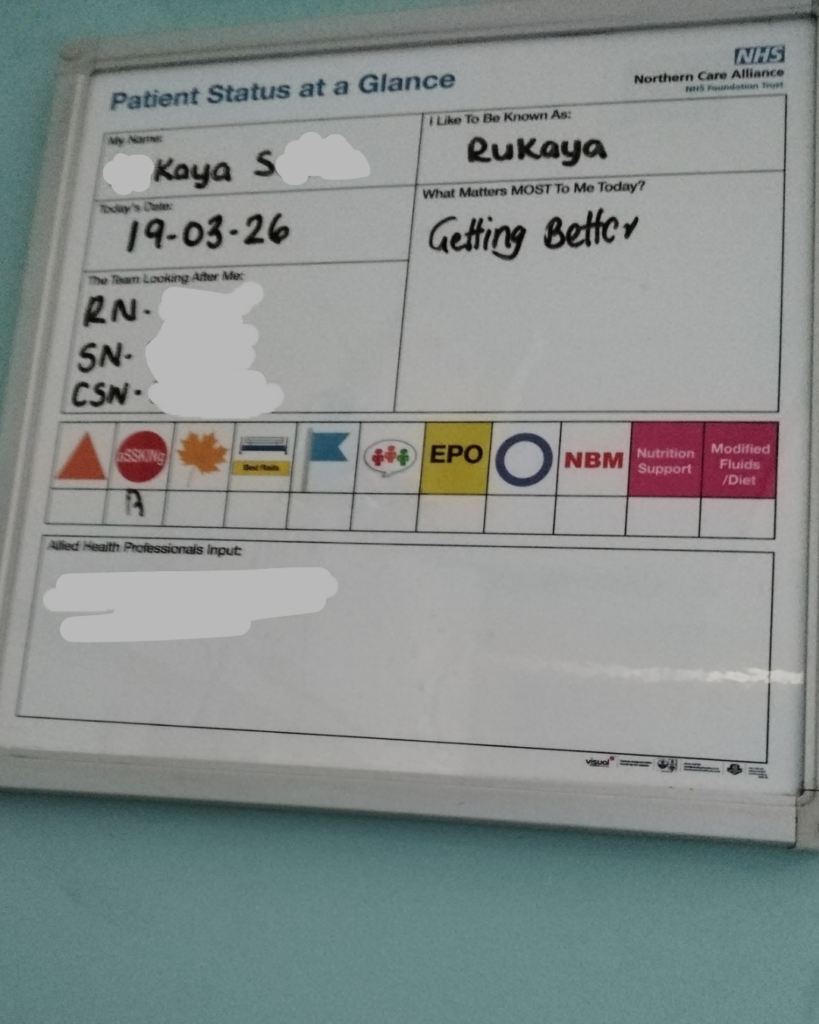
Every time I tried to stand up, the sudden movement triggered intense nausea and my body felt weak forcing me to fall right back down onto the bed. I was prescribed hydrocortisone, which I took for about 5 months before eventually stopping them thankfully.
The symptoms that I found the most challenging to deal with was the overwhelming fatigue. It wasn’t simply feeling tired after a long day; it was a level of exhaustion that seemed to take over my entire body. I could wake up after sleeping and still feel completely drained, as though I had no energy reserves at all. Simple everyday tasks became difficult. I often had to plan my day around how much energy I had. Quite often people would say to me why don’t you exercise, watch a movie, go for a walk. I knew that these comments came from a place of love and a desire to help. But when you are living with a severe endocrine disorder, these well-meaning words can feel like a heavy weight.
I found it difficult to explain to others how it felt to be fatigued, it’s not the usual “tiredness”. Walking to the kitchen to make toast felt like scaling Everest. Doing basic tasks would cause a physical crash and take days to recover from. I placed everyday essentials within easy reach to protect my baseline energy. Using a simple hand-grabber tool to pick things up while staying seated saved me from exhausting physical trips. Recovery meant focusing on a good diet, getting fresh air within my personal limits, and treating rest as my top priority.
“Walking to the kitchen to make toast felt like scaling Everest. Doing basic tasks would cause a physical crash and take days to recover from.”
Alongside the fatigue, I was also dealing with severe headaches and significant muscle weakness. Most of my symptoms were not always visible to other people, it was difficult to explain to others how debilitating it could be. From the outside, I might look okay, but inside my body was struggling. It was frustrating not being able to do things that had once seemed normal. Severe headaches became a constant part of my life and were difficult to predict or escape from.
There were days when the pain was so intense that it was difficult to concentrate or simply feel like myself. My headaches sometimes lasted for several hours or even days, it fluctuated daily. When the intense headaches hit, I found a small comfort in using Vicks VapoRub. Massaging this onto my forehead provided a cooling, distracting sensation that helped dull the sharp edge of the pain when painkillers were not enough. The only specialist medication that helped was Metyrapone.
“There were days when the pain was so intense that it was difficult to concentrate or simply feel like myself.”
I just wish it was easier to explain to others about these symptoms and took the time to understand what a pituitary condition is. Sitting still, using my little grabber tool and applying a bit of Vicks to soothe my headaches was my version of taking care of myself. Recovery with Cushing’s is all about pacing. On my good days, I loved being able to walk a little bit and be outdoors in nature. It was my way of keeping my body moving. I used to manage my days by setting a timetable pacing myself and always making room for quiet regular rest breaks to recharge.
I’m feeling a lot better than before but still recovering each day. I remain under the care of my medical team because a bit of the tumor was left behind and could not be safely removed. I am very grateful to my surgeons and endocrinologist for saving my life and to my family for looking after me and friends that checked in with me. I also want to thank the Pituitary Foundation- their support and resources made a world of difference. There is so much power in shared experiences; listening to others made me realize I wasn’t alone on this journey. I’m sharing my story just in the hope of helping someone else who might be going through the same thing.
“There is so much power in shared experiences; listening to others made me realize I wasn’t alone on this journey.”
Have you found this helpful?
If so, please support us to bring useful information to more people affected by pituitary conditions.