



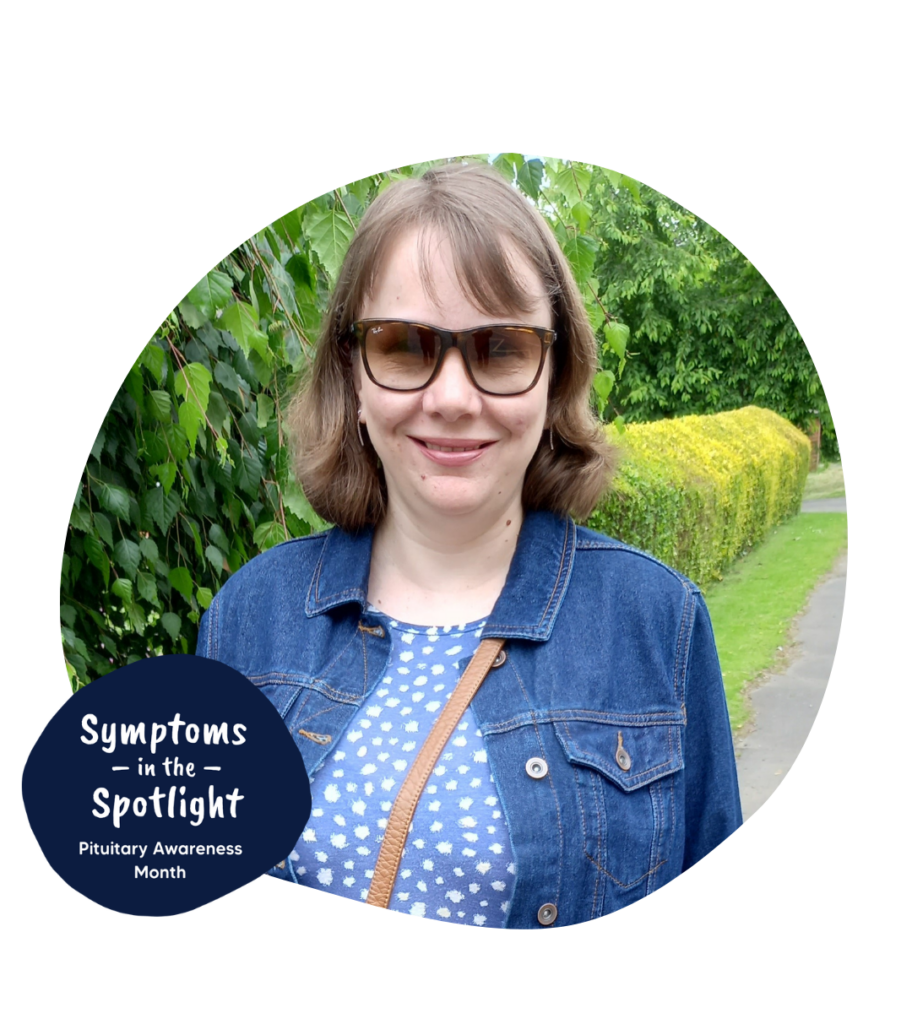
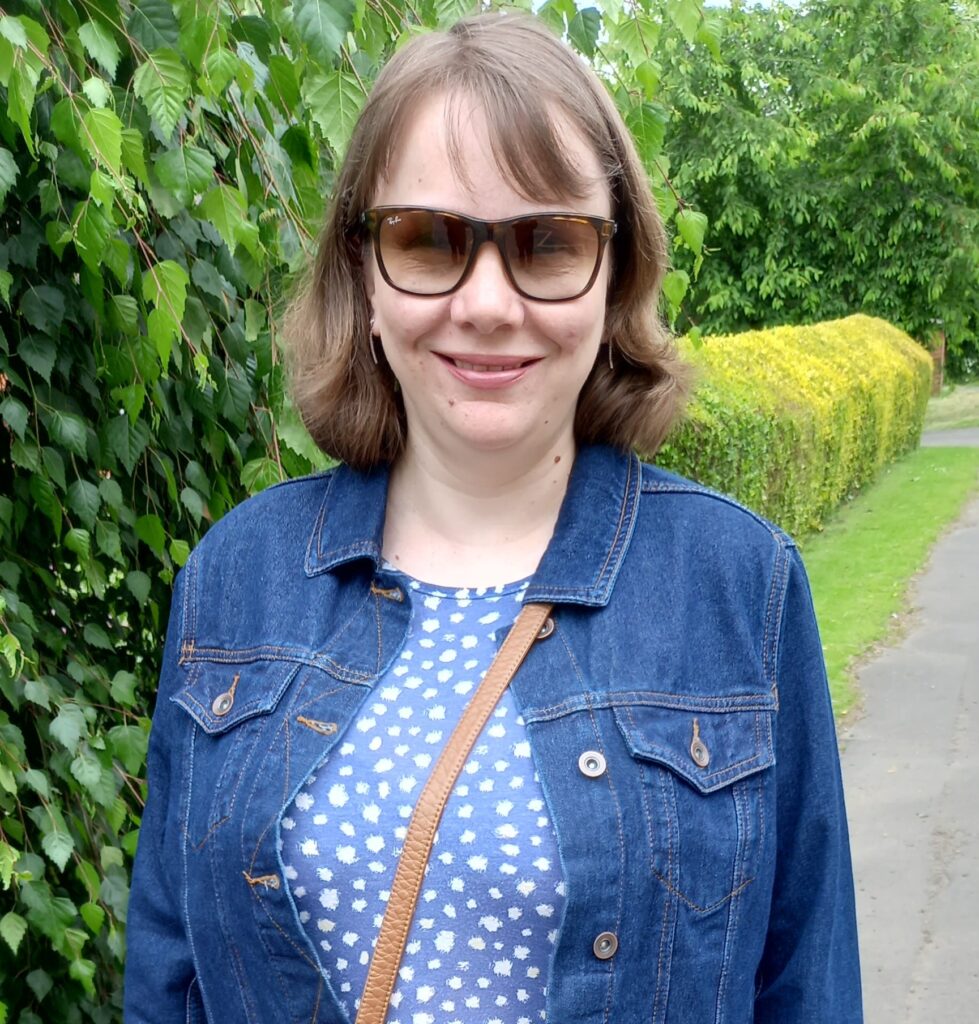
For our Pituitary Awareness Month 2026 campaign, ‘Symptoms in the Spotlight’, Liz shares her story. You can find out more about our campaign and read more of our community’s stories on our website here.
My pituitary story began in 2007 when I was 22 years old. I had been getting a lot of headaches and had started experiencing breast discharge, which I was really concerned about. Fortunately, my doctor was very proactive and sent me for an MRI scan, which revealed I had a benign tumour on my pituitary gland called a microprolactinoma.
I didn’t really know anything about the pituitary and it all felt a bit frightening to begin with. Although I didn’t know why I had developed the tumour, my prolactin levels were very high and I was told that it is quite a rare thing to have. Even though I knew it was benign, it was still quite alarming hearing the word “tumour”! It felt very strange to suddenly have something medically wrong with me which was going to require ongoing monitoring, possibly for the rest of my life.
My doctor gave me some information from The Pituitary Foundation, which I found really supportive at the time and helped me to understand a little more about what was happening. I liked being able to read more about it, and seeing diagrams of the pituitary made it easier to understand.
I started to receive regular MRI scans, had my prolactin levels monitored and was put on medication to help shrink the tumour. At present, it is stable and I’m not on any medication.
Over the years, I’ve experienced a range of symptoms. There are days when I feel quite tired and have headaches. Sometimes I ache all over, and yet various tests have found nothing to explain why. I’ve also noticed that my mental health has been impacted to some degree, with my hormones frequently feeling like they are all over the place! I’ve suffered with low moods for a long time and am on medication to help this. I’ve also put on weight, which can be hard to deal with, never mind the never-ending spots and feeling like a teenager again!
One of the hardest things is questioning every symptom I get – is it because of the tumour or is it something else? It can be difficult when you don’t always know what is causing how you feel, particularly when you look perfectly fine on the outside.
The never-ending appointments, blood tests, hormonal fluctuations and uncertainty can be hard at times. There can be a sense of frustration that it’s always hanging over me, but I’ve learned to try to take things one day at a time and just get on with life.
“The never-ending appointments, blood tests, hormonal fluctuations and uncertainty can be hard at times. There can be a sense of frustration that it’s always hanging over me, but I’ve learned to try to take things one day at a time and just get on with life.”
When time permits, if I need to take a slower day, I will, and I try not to be too hard on myself. Some days are harder than others, and that’s OK. Keeping up with my usual work when I can gives me routine and reassurance, and support from family and friends has helped too. I also find that having information I can trust is important, which is why The Pituitary Foundation has been such a useful source of support over the years.
I think my attitude has changed a bit from being 22 to 42 now. At the time, I hardly told anyone and it felt like such an enormous thing to deal with. Fast forward 20 years and other things come along to test you instead! I think I’m more open about it now, but for me, that has come with age and experience of living with it. I also appreciate that I’m very fortunate that I haven’t had to have surgery to remove it so far.
One thing I wish people understood is that pituitary conditions can affect much more than your physical health. Hormonal fluctuations can have a real impact on your mood and wellbeing, even when everything looks fine on the outside. My treatment has largely focused on the physical side of my condition, but living with a pituitary condition is about so much more than that.
“My treatment has largely focused on the physical side of my condition, but living with a pituitary condition is about so much more than that.”
My advice to anyone experiencing similar symptoms would be to be patient with yourself. It’s OK to have good days and bad days, and it can be difficult explaining how you’re feeling to other people, especially when it isn’t something they can see.
Don’t be afraid to ask questions, talk to people you trust and seek support when you need it. You aren’t being weak if you’re struggling to cope, and you don’t have to keep everything bottled up.
Having the Pituitary Foundation in the background has been really comforting over the years. When I was first diagnosed, I didn’t know of anyone with the same thing I had, so it was nice to hear other people’s stories. Now, nearly 20 years on, I hope that sharing my own story might help someone else feel a little less alone.
Coming up to 20 years, I now can’t imagine life without my ‘little pea’! 💚
Have you found this helpful?
If so, please support us to bring useful information to more people affected by pituitary conditions.