



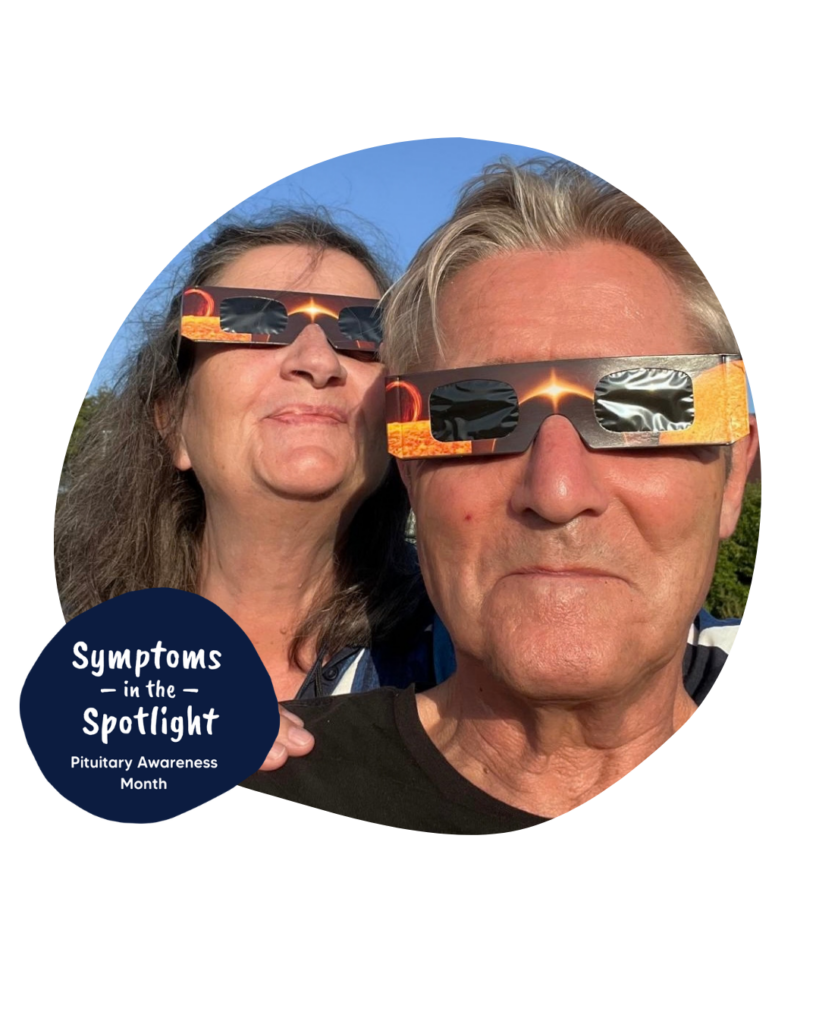
For our Pituitary Awareness Month 2026 campaign, ‘Symptoms in the Spotlight’, Ali shares her story. You can find out more about our campaign and read more of our community’s stories on our website here.
How does fatigue and emotional overwhelm impact me, my family and how I live my life?
Hi everyone out there getting involved in Pituitary Awareness Month 2026!
I am Ali, married to Terry, currently 9 years post-diagnosis and 5 years post-surgery to remove a macro-adenoma.
Fatigue is a big part of my life, pre- and post-diagnosis and surgery. My husband and family have over time accepted and adapted to how this impacts me day-to-day, planning ahead and building in a pace that allows me to manage and not spill over into emotional overwhelm when exhausted.
“Fatigue is a big part of my life, pre- and post-diagnosis and surgery. My husband and family have over time accepted and adapted to how this impacts me day-to-day, planning ahead and building in a pace that allows me to manage and not spill over into emotional overwhelm when exhausted.”
The journey to diagnosis was not easy. My main presenting symptoms were fatigue, extreme anxiety and nausea. After many months, I was admitted to hospital via A&E. At that point I had Syndrome of Inappropriate Antidiuretic Hormone (SIADH) related to the pituitary tumour which had contributed to these worsening symptoms, and my emotional and mental health in particular were affected. For anyone who has experienced an adrenal crisis and/or a panic attack, you know how awful this feels.
The wish not to have a crisis or mental health meltdown, and concern and worry in itself impacts cortisol levels which requires increased steroid intake. As a family we work together to try and reduce stress and have a flexible but supportive daily routine. My husband really takes the lead to ensure that medication and routine mean I don’t stray into a super-exhausted meltdown which I have been prone to.
Sleep, or should I say lack of sleep, is also a feature in my life, so having a responsible other-half means in the morning, if I have dropped off to sleep exhausted, he wakes me to give me my medication to keep my cortisol levels on track. I am so grateful for my husband, family and friends, but also I really need to thank the Walton Centre and the Aintree Hospital teams who have gone ‘above and beyond’ to support me with the difficulties I have experienced from diagnosis onwards. They stabilised me in my presenting secondary adrenal insufficiency diagnosis adjusting my steroid dose over time, my hypothyroidism levels are monitored (for which I take levothyroxine) and I also inject growth hormone for severe growth hormone deficiency. Because I was made aware of what to look out for re SIADH (for which I am no longer treated) we know to get support immediately if this reoccurs.
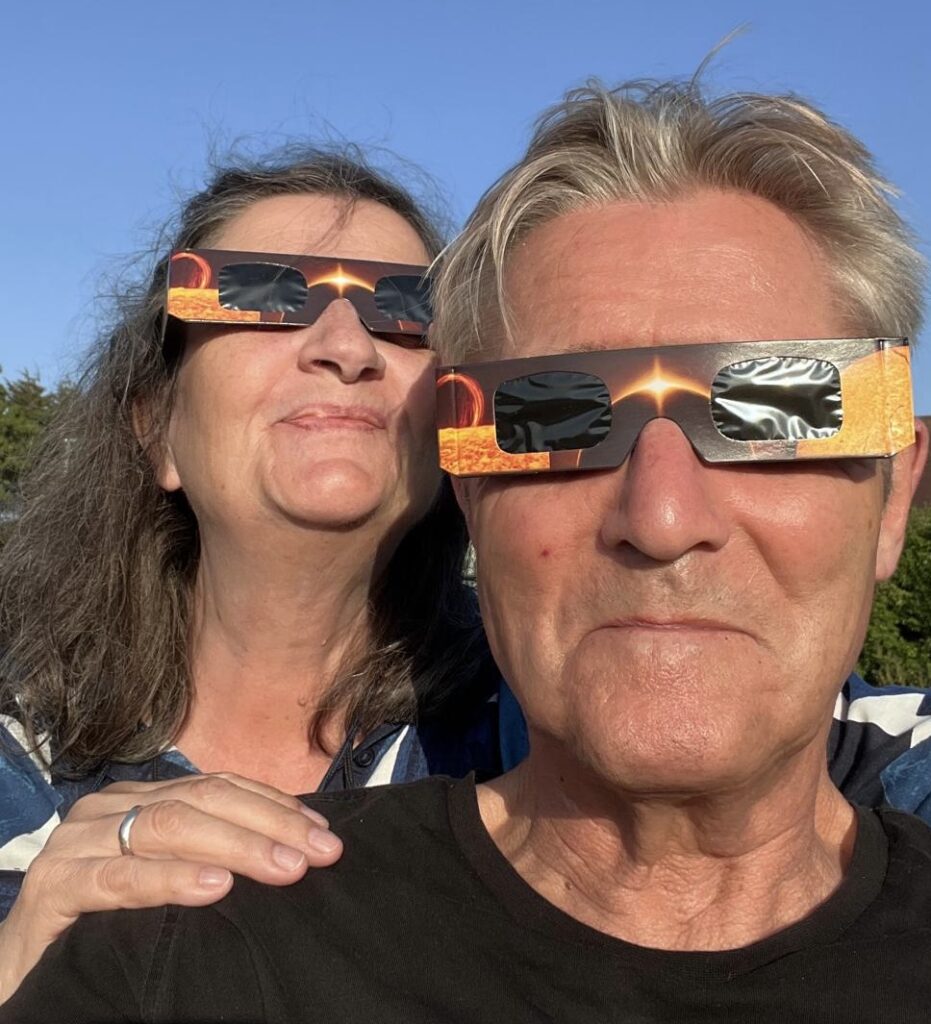
Having pre-existing mental health conditions prior to my diagnosis means I take a lot of care to manage warning signs of mental health escalation and to put in place a toolkit of actions early. Some of this can be being outside in a green space, using mindfulness and deep breathing really helps, but really for me nature is a great healer. In the photo below you can see my husband and myself witnessing an event that brought so many people together outdoors. The eclipse in August 2026 – wow, what a spectacle! No pun intended, re the eclipse spectacles!! Thank you, Sophie and Mark for being amazing and sourcing them for us to really be in the moment that day.
I hope in sharing what I have in this blog, you can take away ideas that you may not have used yourself and just to reflect on your own journey and maybe to contribute your own blog next year for PAM 27!!
Take care of yourselves whatever stage of your pituitary journey you have reached, Ali.
Have you found this helpful?
If so, please support us to bring useful information to more people affected by pituitary conditions.